
Ethereum is demonstrating strength above key price levels, indicating a potential market shift. March data from XWIN Research Japan highlights a capital reallocation, not just momentum. While Bitcoin saw a modest gain, Ethereum outperformed significantly, with its market cap expanding as Bitcoin's declined. This suggests a deliberate move of capital away from Bitcoin and into Ethereum.
Ethereum's higher realized volatility confirms its role as a higher-beta asset, amplifying market movements. As market conditions improved in March, Ethereum responded more forcefully. The critical question remains whether these supportive conditions are strengthening or fading.
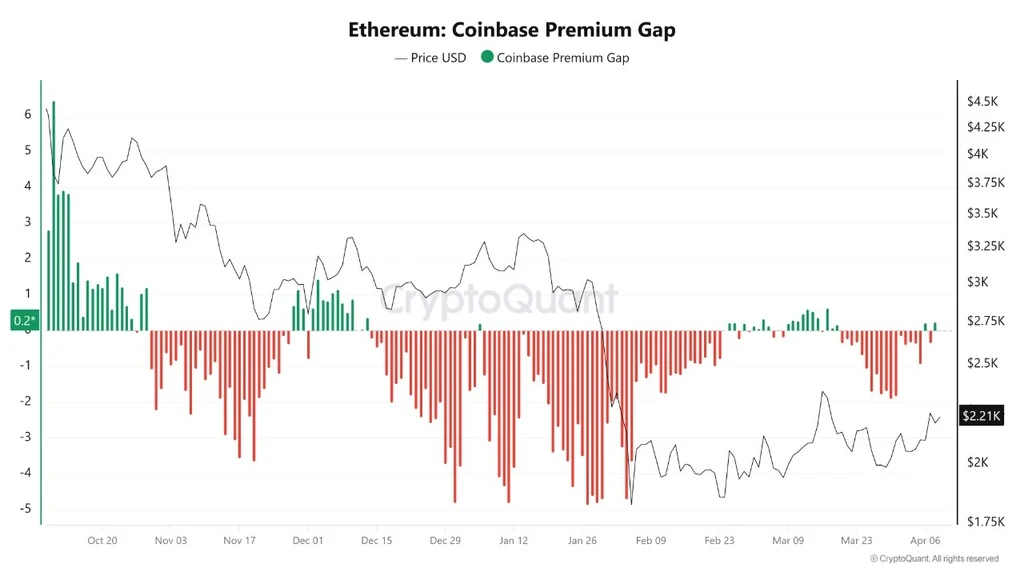
On-chain signals reveal Ethereum's underlying strength. Exchange outflows continue, reducing the available sell-side pressure and indicating a preference for long-term holding. While US institutional demand, measured by the Coinbase Premium Gap, is still recovering, its positive trajectory is significant. Active addresses are also trending higher, confirming increased network usage.
The distinction between Bitcoin and Ethereum is becoming clearer: Bitcoin's thesis is monetary, serving as a store of value, while Ethereum's is utility-based, functioning as financial infrastructure. In the current market, with expanding real usage and approaching institutional demand, the infrastructure asset is poised to re-rate before the monetary asset fully recovers.
Ethereum is currently experiencing capital inflows, tightening supply, and network growth. This combination creates a structurally stronger setup than current price action alone suggests.
Ethereum is also attempting to build a recovery structure after a February breakdown. Price is trading around $2,200, a level that has transitioned from resistance to a short-term pivot. While below its longer-term moving averages, the 50-day moving average is flattening, indicating stabilizing short-term momentum.
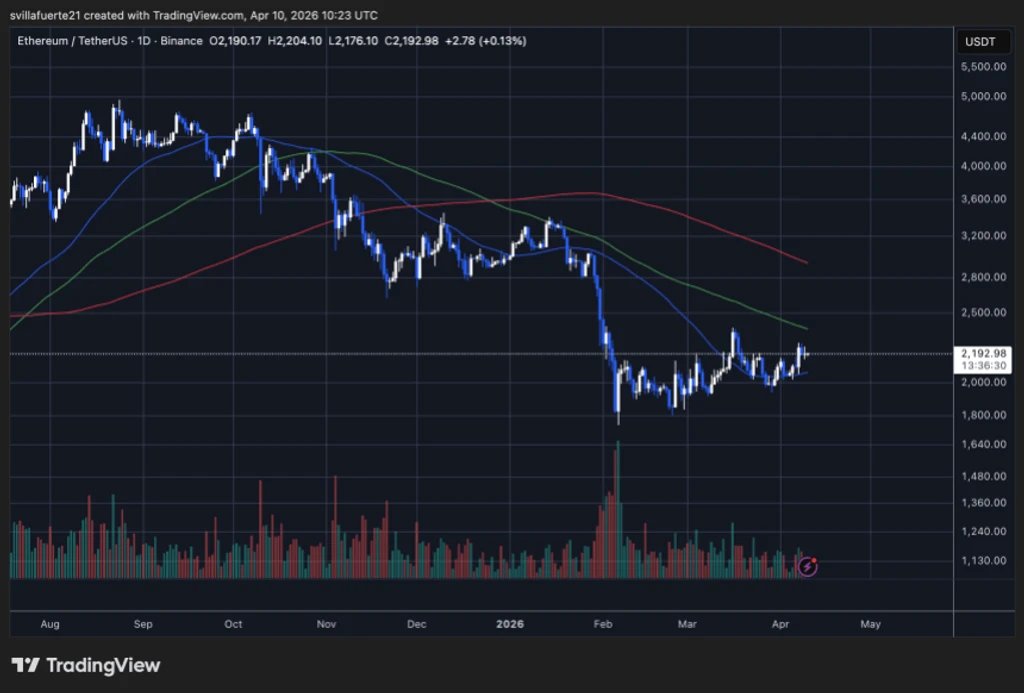
The market has moved from violent sell-offs to controlled consolidation with reduced volatility and consistent buying on dips. A confirmed shift from distribution to accumulation would require a sustained move above the $2,400-$2,600 range.