
Ethereum has emerged as one of the most heavily shorted assets globally, a trend that signals a significant divergence between market expectations and the cryptocurrency's underlying fundamentals. This positioning places ETH at the forefront of complex macroeconomic and structural market narratives.
Short interest in Ethereum is now rivaling that of traditional commodities such as silver. Despite this, institutional investors have reportedly acquired approximately $21 million in ETH daily over the past 21 months, totaling nearly $11.8 billion through ETFs alone. Additional billions have been acquired through channels outside of ETFs by firms like Bitmine and Sharplink, alongside other digital asset treasuries.
This influx suggests a fundamental structural shift in the global financial system, with institutions increasingly recognizing the necessity of on-chain integration and Decentralized Finance (DeFi) infrastructure for future survival. Ethereum remains the dominant platform for DeFi and real-world assets, bolstered by its credible neutrality, reliability, and rapidly improving transaction speeds and costs.
From a market structure standpoint, ETH is consolidating within a 5-year range established since 2021. Its product-market fit and narrative strength are considered stronger than ever, poised for mass tokenization and smart contract utilization.
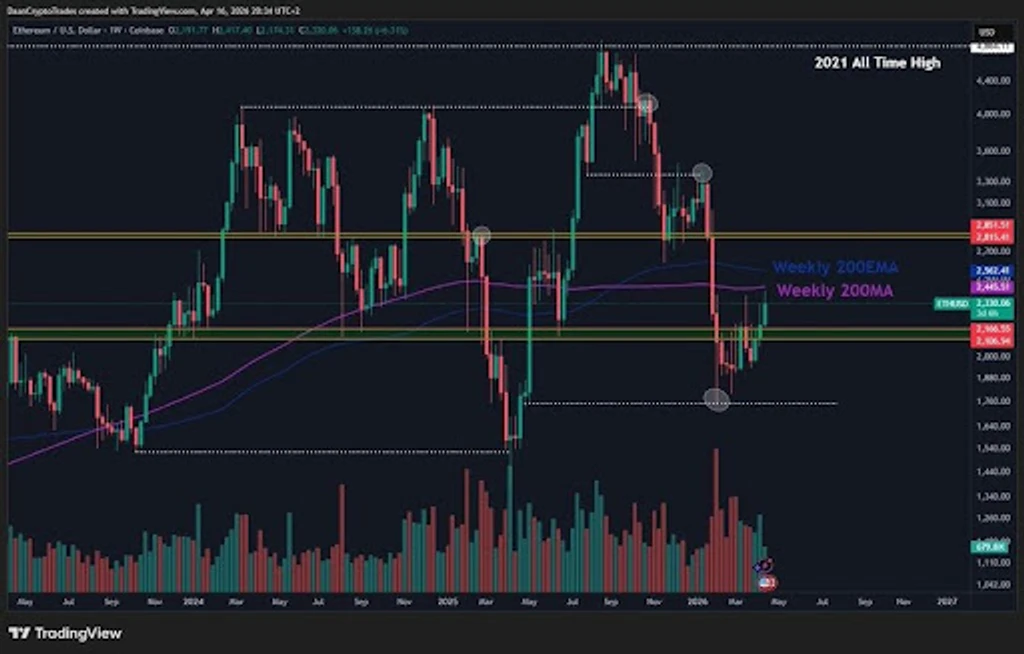
Analysts note that Ethereum is at a critical technical juncture, retesting its weekly 200-day moving average (200MA). This level was lost during the January sell-off, mirroring a breakdown seen last year amid market volatility. The focus now is on whether bullish sentiment can reclaim this key level as support.
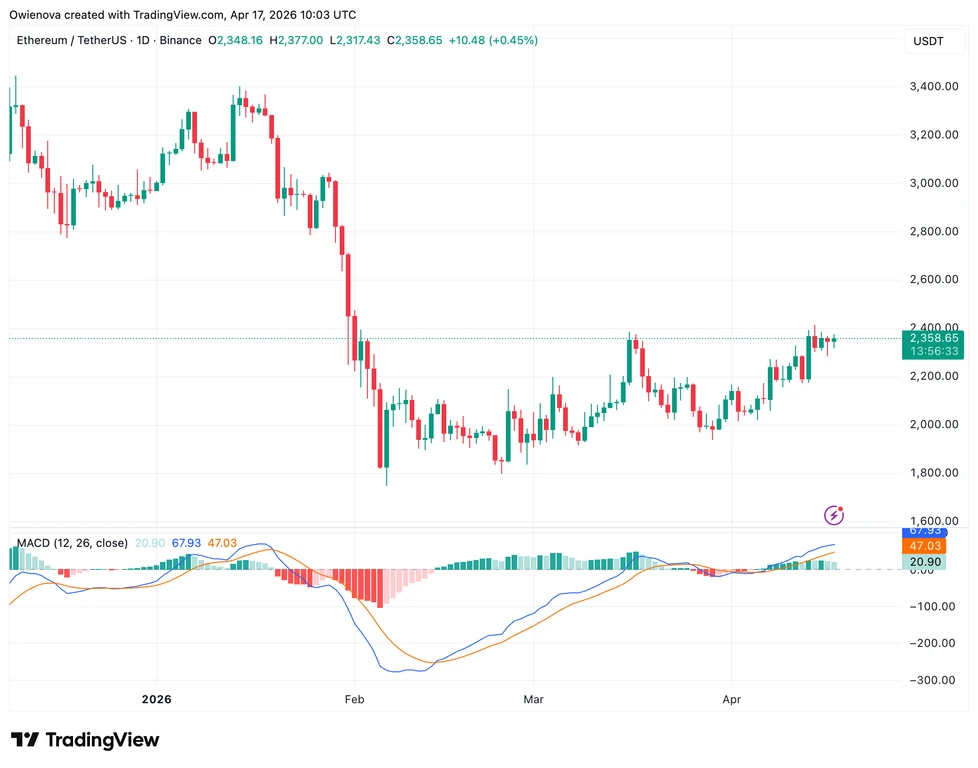
Ethereum's strength is further underscored by its leading position in validator distribution, with an estimated 921,500 validators. This scale reinforces core blockchain principles of decentralization, long-term resilience, and security, establishing ETH as the reference point for network maturity.