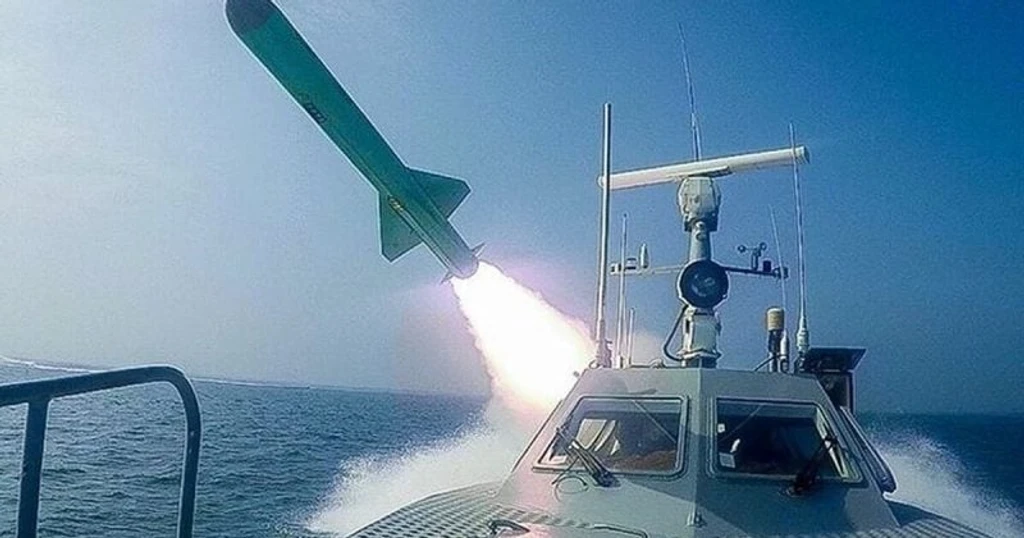
Iran's Islamic Revolutionary Guard Corps claims to have intercepted an enemy cruise missile near the western city of Khorramabad. This military assertion occurs as the IRGC faces heightened international scrutiny for its vast cryptocurrency operations.
The IRGC is not just a military force; it is a dominant player in global cryptocurrency. The group controls roughly half of Iran's total crypto activity, with affiliated addresses receiving over $3 billion in flows during the fourth quarter of 2025.
Sanctions efforts target this financial network. In July 2026, Israeli authorities sanctioned 37 IRGC-linked crypto wallets valued at around $8 million-a small fraction of the quarterly flow. Each sanctioned address creates a global compliance obligation for exchanges and decentralized finance protocols.
The city of Khorramabad is home to the Imam Ali Missile Base, a key ballistic missile installation. Satellite imagery confirmed US-Israeli strikes targeted the facility earlier in 2026. Iran's state media has framed the interception claim as proof of defensive strength; independent verification is absent.
For financial markets, the IRGC's crypto operations represent significant demand for digital assets. Disrupting these sanctioned channels could remove buy pressure from markets, particularly affecting stablecoins and privacy-focused tokens used in evasion schemes.