SpaceX's public debut on June 12 raised $75 billion at $135 per share, valuing the company at over $2 trillion. While early investors saw immediate gains, crypto traders holding pre-IPO subscription tokens were left without any allocation.
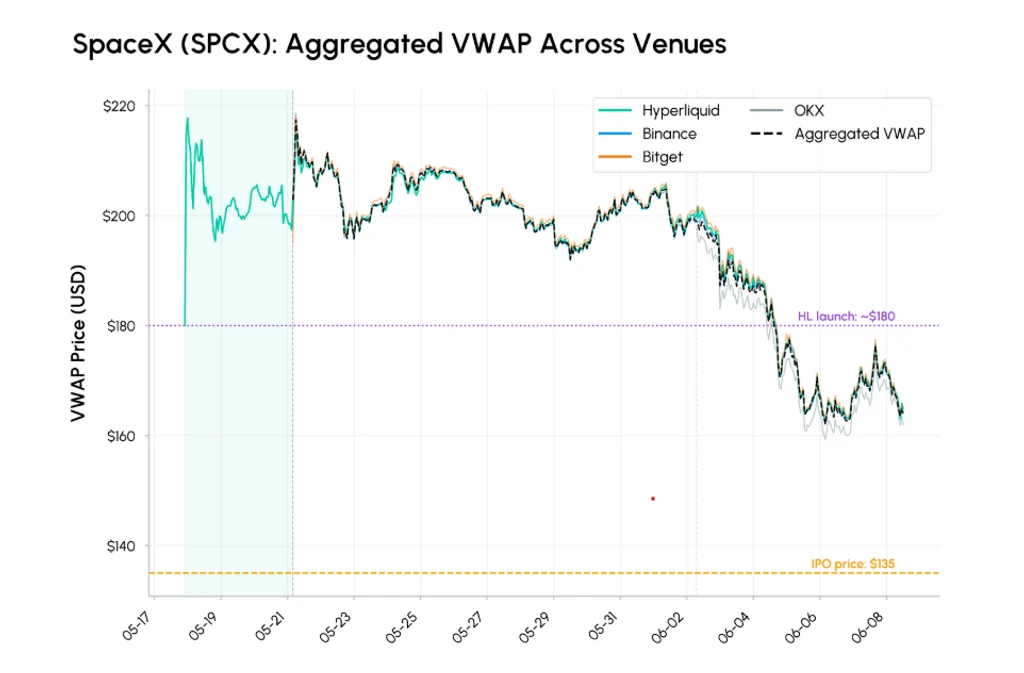
Pre-IPO perpetuals on platforms like Hyperliquid, Binance, and OKX accurately predicted the opening stock price. In the 30 minutes before the Nasdaq open, SPCX perpetuals traded at a volume-weighted average price of $159.89, roughly 6.6% above the opening print. Talos Research data confirmed these markets proved onchain traders could generate credible price discovery and deep liquidity.
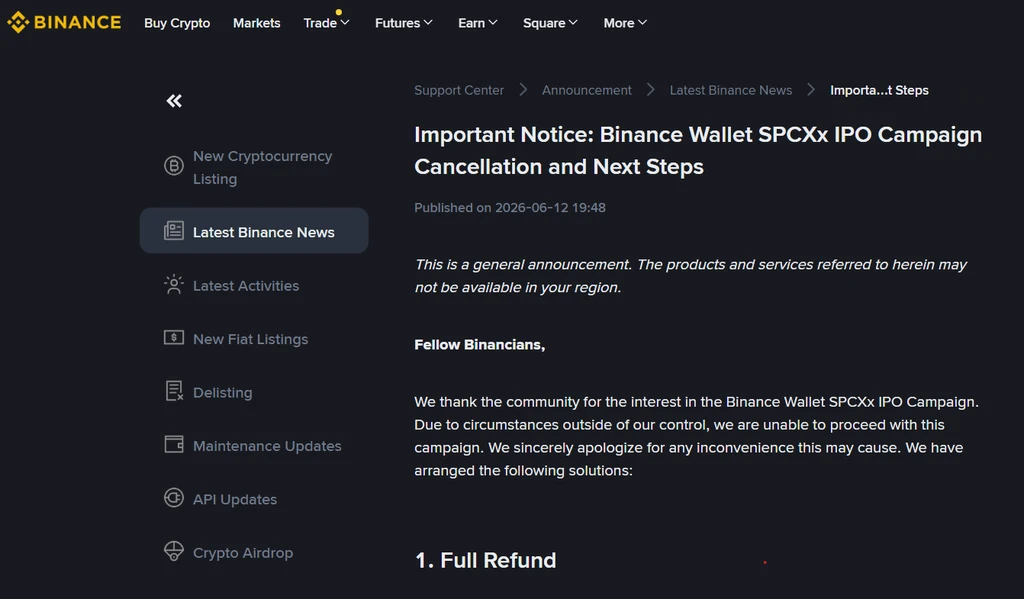
However, the tokenized IPO access pipeline completely broke down. The SpaceX IPO was four times oversubscribed. Intermediaries failed to secure shares, forcing platforms like Binance, Bybit, and Bitget Wallet to cancel campaigns and issue refunds. Kraken's xStocks, the underlying distribution mechanism, could not satisfy demand.
Binance founder Changpeng Zhao posted the cancelation notice with the comment, "Protect users when things don't go as planned," triggering fury from retail traders who saw $557 million in combined capital produce zero shares.
The collapse highlights a structural gap: crypto venues can create synthetic exposure but cannot control primary market allocations controlled by traditional underwriters. In response, Bitget shifted to a broker-backed 1:1 tokenized share model through its Reality platform.
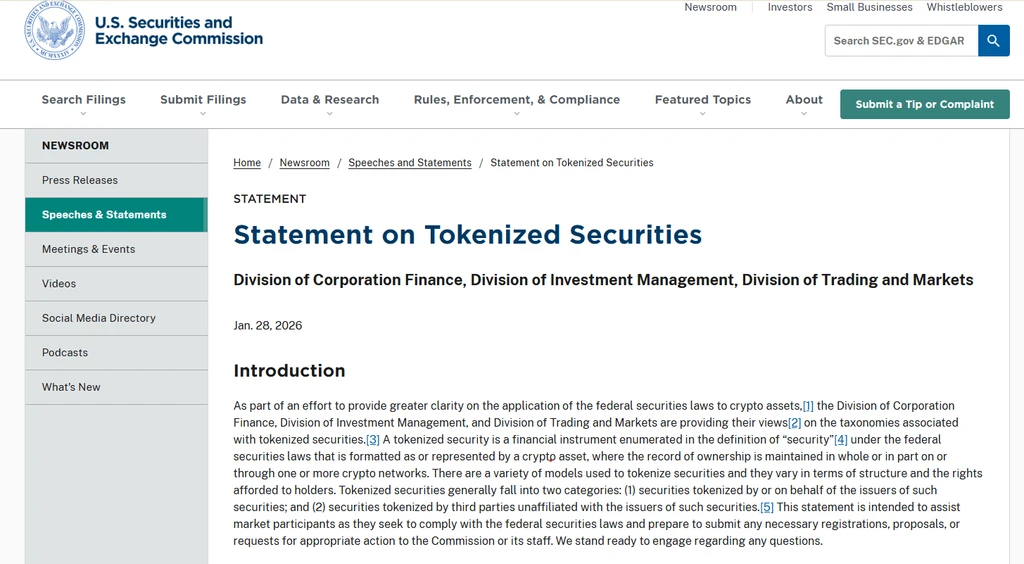
The Securities and Exchange Commission declined to comment, but a January 2026 staff statement stressed that tokenized stocks remain full securities subject to registration and disclosure rules.
Industry leaders argue the event sharpened, not killed, the tokenized equity narrative. Dinari's Gabriel Otte stated the goal is to extend public market reach, not reinvent it, through regulated custody and clear legal rights. Talos' Samar Sen noted that the scale of activity proves these markets are becoming increasingly difficult for traditional finance to ignore.