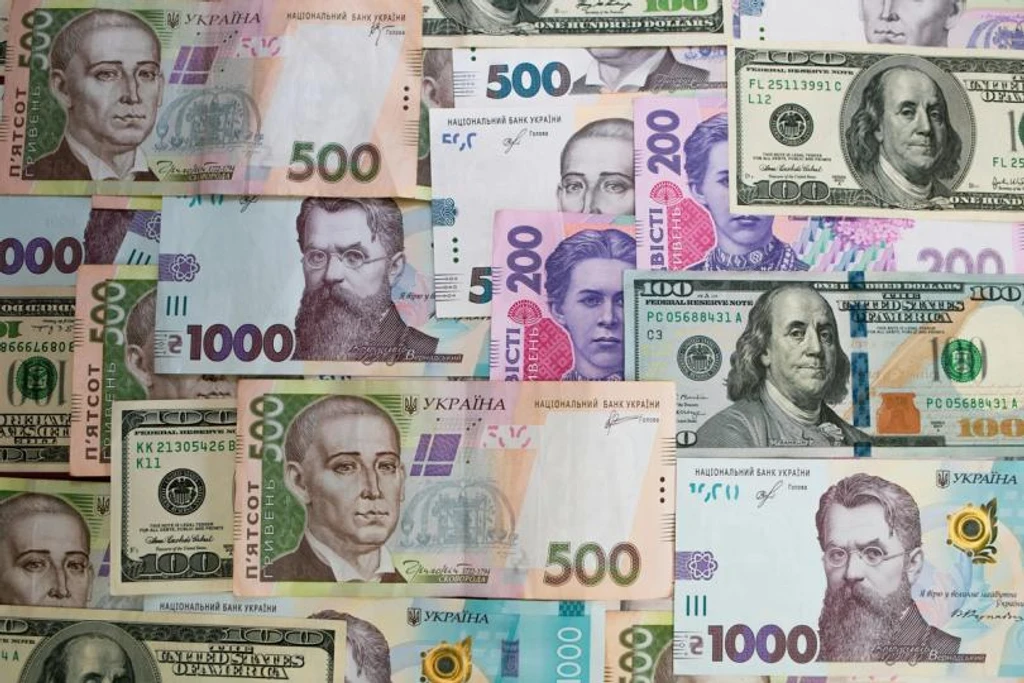
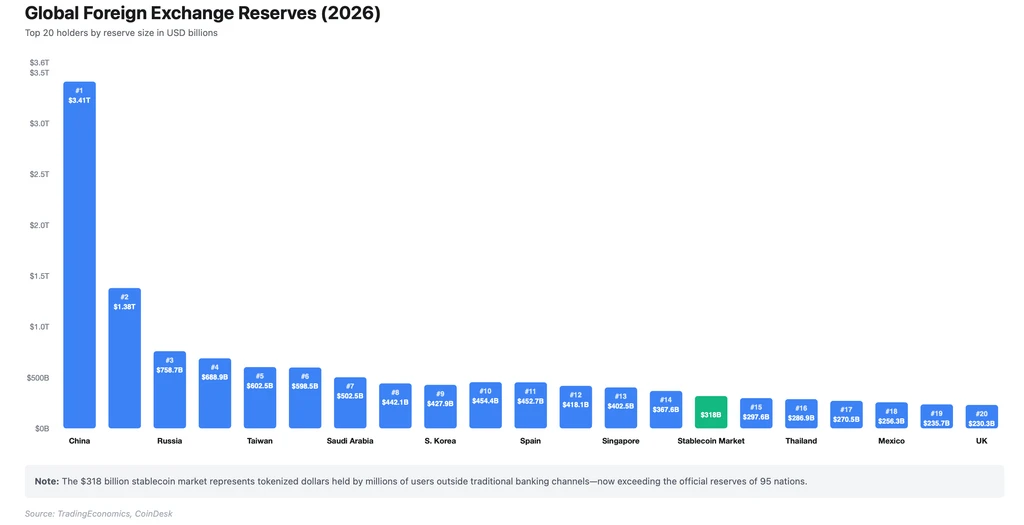
The combined market value of all stablecoins has reached a record high of $322 billion, surpassing the foreign exchange reserves of 95 countries, including developed economies like the United Kingdom, Canada, and the United Arab Emirates.
Stablecoins are tokenized versions of fiat currencies issued on blockchain, pegged 1:1 to the U.S. dollar or other currencies such as the euro and yen. The growth is evidence of how fast capital is migrating to blockchain rails.
Foreign exchange reserves are the dollars, euros, yen, and gold that central banks hold as a buffer to stabilize currencies, pay foreign debts, and finance imports. Only 14 nations, led by China, Japan, Russia, India, Taiwan, and Germany, hold more FX reserves than the stablecoin market.
Stablecoins are widely used for trading cryptocurrencies, allowing users to exit volatile tokens without converting back to fiat. They also serve as the settlement layer for DeFi protocols and enable faster, cheaper cross-border payments.
However, the Bank of International Settlements warns that stablecoin transactions can trigger capital outflows, leaving vulnerable current account deficit countries exposed to fiat-currency depreciation. The BIS says stablecoins may enable circumvention of capital controls and provide a frictionless mechanism for residents of emerging and developing economies to shift savings into dollar-denominated instruments.