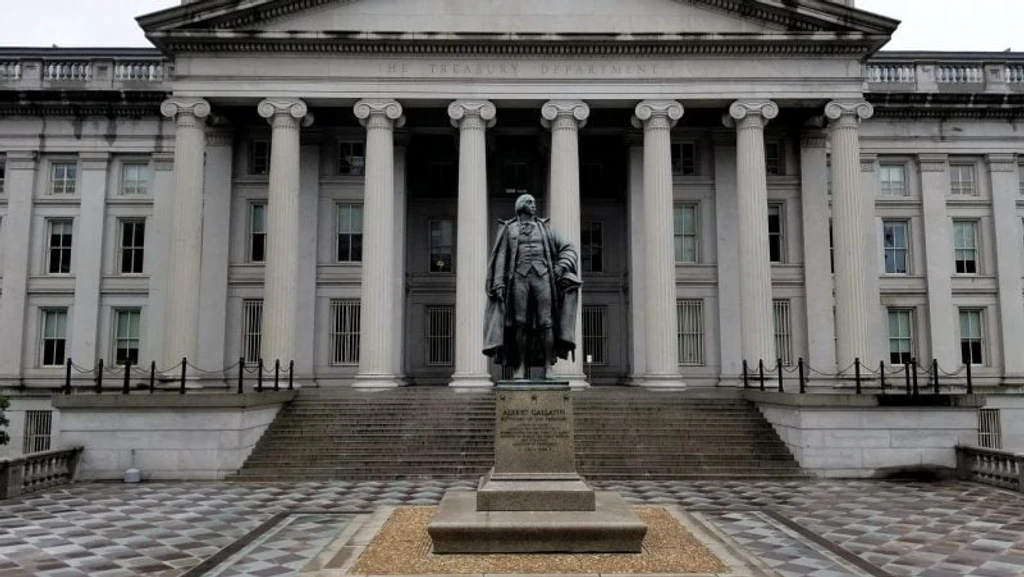
The US Treasury Department has issued a report acknowledging legitimate uses for cryptocurrency mixing services, a notable shift from its prior stance that largely viewed them as tools for money laundering. The 32-page report indicates that mixers can serve valid purposes such as protecting personal wealth, shielding business payment details, and facilitating anonymous charitable donations.
This marks a significant pivot from an agency that previously sanctioned mixer protocols and pursued legal action against their developers. However, the Treasury is not advocating for unrestricted use. The report highlights the transparency inherent in public blockchains, where every transaction is visible, unlike traditional finance. Mixers address the desire for privacy in spending habits.
Concurrently, the report acknowledges the persistent threat of illicit activities, noting North Korean cybercriminals stole approximately $2.8 billion in digital assets between January 2024 and September 2025, with mixers being a primary laundering channel. To address this, the Treasury proposes "hold laws" allowing temporary freezing of suspect assets, rather than outright bans.
This move represents a reversal from the enforcement era, including the 2022 sanctions on Tornado Cash. The report provides a new intellectual framework, suggesting that as digital payments become more prevalent, ordinary users require tools for financial privacy. Banning such technology outright may create more problems than it solves, especially if compliant alternatives with oversight can be developed.
For investors, this shift may reduce regulatory risk for privacy coins and infrastructure. Privacy coins collectively reached a market capitalization of $24 billion in early 2026, with Monero seeing significant growth. Protocol-level privacy infrastructure like Railgun and Aztec Network have also experienced substantial increases in total value locked. Institutional players, previously hesitant due to reputational concerns, may now find political cover to participate.
Key risks remain, including the potential for illicit actors to continue exploiting these tools and the possibility of renewed enforcement if a "compliant" mixer experiences a major hack or scandal. Investors are advised to monitor congressional action on proposed "hold laws" and whether major exchanges will relist privacy tokens. Protocols designed with compliance architecture from the outset, such as Railgun and Aztec, are seen as best positioned for long-term survival.