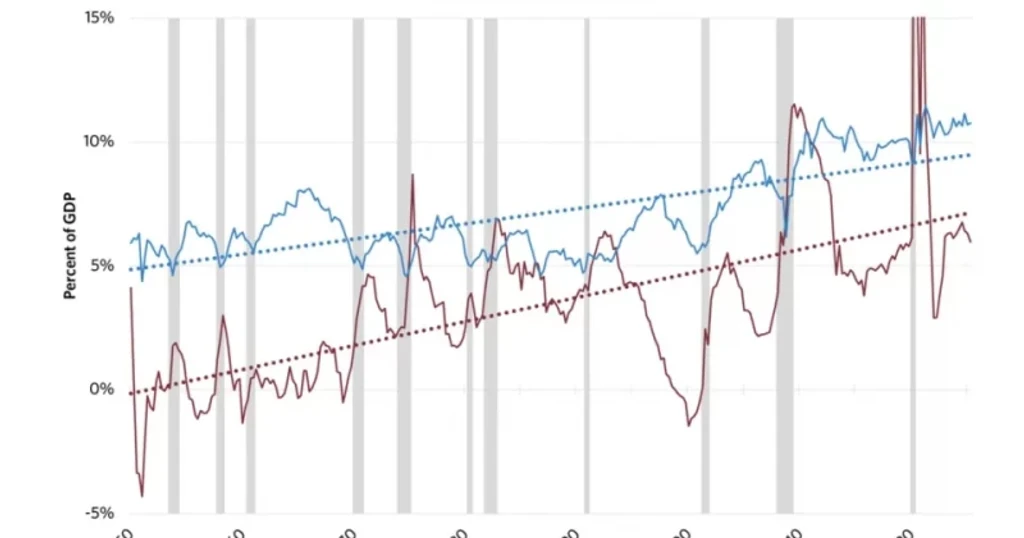
The U.S. federal budget deficit is projected to hit roughly $2 trillion this fiscal year, over 6% of GDP - more than double the 3% threshold considered sustainable. This isn't wartime or pandemic spending; it's the normal operating budget.
The Congressional Budget Office revised its FY2024 deficit estimate to $1.9 trillion, a 27% increase from prior projections. Mandatory spending on Social Security, Medicare, and Medicaid grows faster than revenue. The interest on the national debt has become a major contributor, creating a feedback loop: more debt means higher interest costs, requiring more borrowing.
The Treasury is expected to issue over $2 trillion in debt this year. Flooding the market with supply pushes yields higher, increasing debt servicing costs.
For crypto investors, persistent multi-trillion-dollar deficits feed directly into the dollar debasement narrative that helped push Bitcoin past $100,000. Bitcoin was designed as a response to this monetary environment. If the Fed eventually steps in as a buyer of last resort, effectively monetizing the debt, that scenario is the purest bull case for hard-cap assets like Bitcoin.
The risk: if policymakers get serious about fiscal discipline, the urgency behind the debasement narrative fades. But given political realities, that outcome appears unlikely.