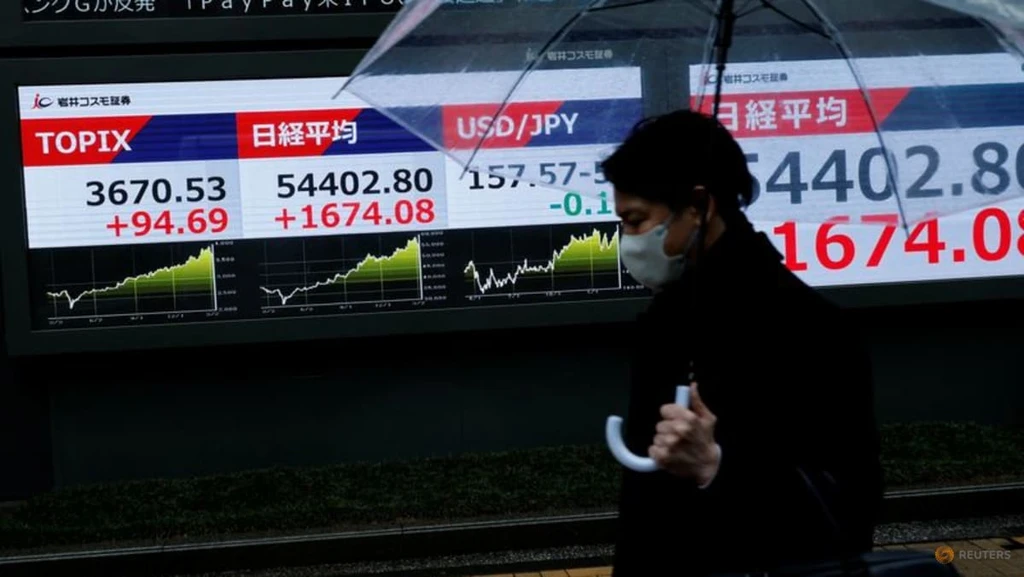
Asian markets showed caution on Monday as tensions in the Gulf pushed oil prices higher, complicating inflation forecasts and central bank policy outlooks.
The Wall Street Journal reported that the Trump administration may soon announce a multinational coalition to escort ships through the Strait of Hormuz. U.S. President Donald Trump warned NATO allies of consequences if they fail to support.
Brent crude rose 0.8% to $104.01 a barrel, while U.S. crude fell 0.2% to $98.48. Central banks in the U.S., UK, Europe, Japan, Australia, Canada, Switzerland, and Sweden held their first full meetings since the war began, with energy volatility at the center.
JPMorgan’s Bruce Kasman said inflation expectations are rising, prompting most central banks to delay rate cuts. Global bond yields surged, with the 10-year Treasury yield climbing to 4.267%-32 basis points higher since the conflict began.
The Federal Reserve is expected to hold rates steady, with June easing odds dropping to 26% from 69% a month ago. The Reserve Bank of Australia may hike its cash rate to 4.1% amid domestic inflation pressures.
Meanwhile, equities in Europe and the U.S. edged higher, supported by AI momentum ahead of Nvidia’s GTC conference. The U.S. dollar gained strength as a safe haven, though it dipped slightly after the escort plan report. The yen fell to 159.47, near a 20-month high, while the euro hovered near a seven-month low.
Gold remained flat at $5,012 an ounce, lacking appeal as a hedge despite rising risks.