China’s credit expansion rebounded in May, reversing one of the most severe lending contractions in recent history. New yuan loans contracted by 10 billion yuan ($1.47 billion) in April 2026, marking the first outright decline since July 2025 and missing consensus forecasts of 300 billion yuan.
The April data revealed a dramatic shift from nearly 3 trillion yuan in fresh lending to negative territory. Outstanding yuan loan growth slid to a record low of 5.6% year-over-year. Aggregate financing to the real economy (AFRE) fell below 630 billion yuan, significantly underperforming the median forecast of 1.3 trillion yuan.
Household behavior drove much of this weakness. Chinese households made net repayments of approximately 787 billion yuan in April, indicating a sharp retreat from borrowing for homes or consumption. This trend reflects a broader structural cooling, with total new yuan loans for 2025 reaching their lowest full-year figure since 2018 at 16.27 trillion yuan.
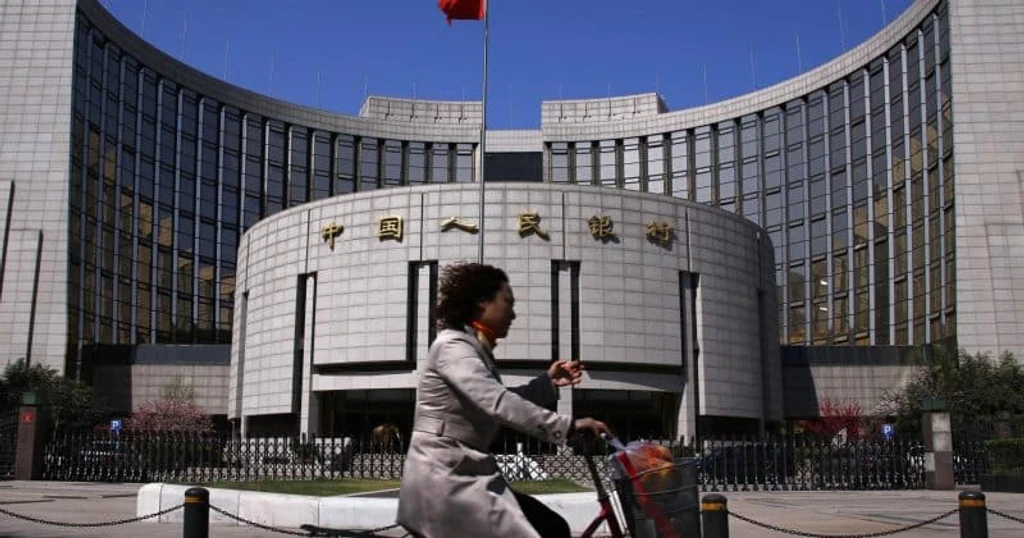
The People’s Bank of China (PBOC) responded by encouraging major banks to increase lending volumes. Analysts projected new loans between 500 and 550 billion yuan for May, a modest improvement that still falls short of historical norms. The central bank has increasingly relied on fiscal tools and balance-sheet repair strategies rather than pure monetary loosening.
For global investors, the signal remains nuanced. While the May rebound suggests April may have been an anomaly driven by seasonal distortions, underlying trends point to continued economic softness. Persistent household deleveraging keeps pressure on industrial metals and bulk commodities. More critically, sustained domestic demand weakness could fuel deflationary pressures, prompting Chinese manufacturers to lean harder into export markets, potentially creating trade friction with partners wary of cheap goods flooding their economies.