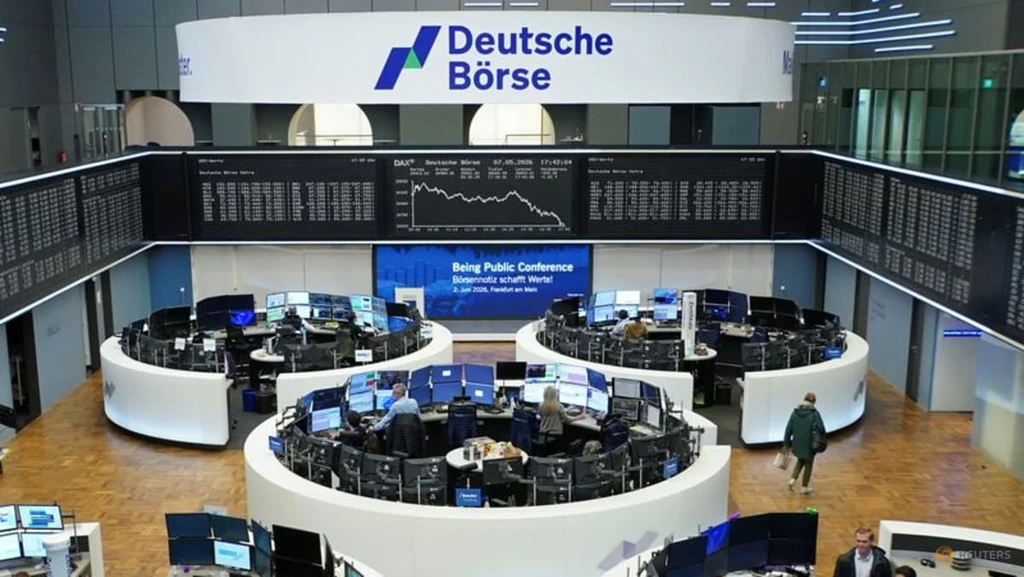
European stock indexes slipped on Tuesday and oil prices climbed after the U.S. launched new strikes in southern Iran, undercutting investor hopes for an imminent peace deal.
Sentiment had improved in recent weeks on expectations of a de-escalation in the U.S.-Iran conflict. But those bets were revised after Washington said it conducted “defensive strikes” in southern Iran on Monday. U.S. Secretary of State Marco Rubio said a deal could still take “a few days.”
By midday, the STOXX 600 was down 0.2%, though near its highest since the war began. London's FTSE 100 rose 0.7%, while Germany's DAX fell 0.5%. The MSCI World Equity Index was flat but up 3.8% this month.
“Uncertainty in the Middle East is weighing on markets,” said Peter Schaffrik, global macro strategist at RBC Capital Markets. “It went from agreement is near to everyone needs to sign the Abraham Accords to bombing. It’s not entirely clear what’s going on.”
Wall Street futures pointed to gains later, with S&P 500 e-minis up 0.7% and Nasdaq e-minis up 1.1%.
Brent crude futures rose 2.4% to $98.50 a barrel. U.S. West Texas Intermediate slipped 4.7% to $92.04, with no settlement on Monday due to the U.S. Memorial Day holiday.
Schaffrik noted “underlying optimism” that the Strait of Hormuz could reopen soon. Brent has fallen sharply from its late April peak above $120.
ECB board member Isabel Schnabel said the central bank should raise rates in June even if a deal is reached with Iran, as the conflict has been prolonged and high energy prices are spilling into the broader economy. Money markets now see a 90% chance of a June hike.
European bond yields rose after the strikes but remained near multi-week lows. The 10-year German yield stood at 2.9642%. The U.S. dollar was steady, with the dollar index at 99.026. Gold fell 0.8% to $4,534.86.