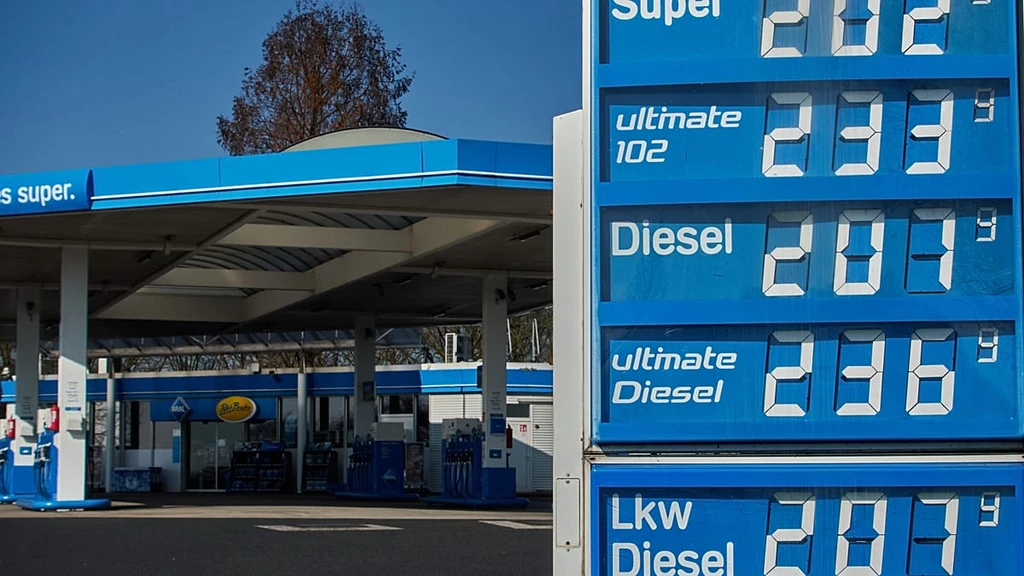
Oil prices experienced a dramatic reversal as President Trump signaled the end of US military operations against Iran. Despite this, European consumers are seeing little immediate relief at the pump.
Trump stated US and Israeli forces made rapid progress, assuring that global energy supply routes would not be disrupted. West Texas Intermediate crude fell sharply from over $119 to below $90 per barrel. However, the pass-through of lower crude prices to retail fuel costs is delayed and not always symmetrical.
European fuel prices remain elevated, with petrol around €1.90-€2.12 per litre and diesel between €2.06-€2.19 in major cities like Milan, Paris, and Frankfurt. Economists note that increased energy prices are a primary transmission channel for inflation in Europe, as most countries are net oil and gas importers.
Goldman Sachs estimates a 10% oil price increase can lead to a 0.3% rise in Eurozone inflation, with potential for amplification if gas prices also remain high.
Bank of America outlines three scenarios:
- Stabilization near $80 oil and €50 gas for two months: Inflation peaks near 2.5%, then falls below 2% by late summer.
- Sharper shock ($100 oil, €60 gas): Inflation averages 2.4% in 2026 with a Q2 peak above 3%; growth slows to 0.8%.
- Prolonged disruption (four months): Inflation could reach 2.2%, with Q2 inflation averaging 2.5% and GDP slowing to 0.9%, risking contraction.
If energy prices persist, the ECB might need to raise rates by 50-75 basis points. Oxford Economics suggests central banks can no longer simply 'look through' energy-driven inflation, as it risks feeding broader expectations.
Prediction markets now price a 42% probability of an ECB rate hike in 2026, a significant increase driven by the potential for energy-driven inflation to push eurozone inflation back above 3%.