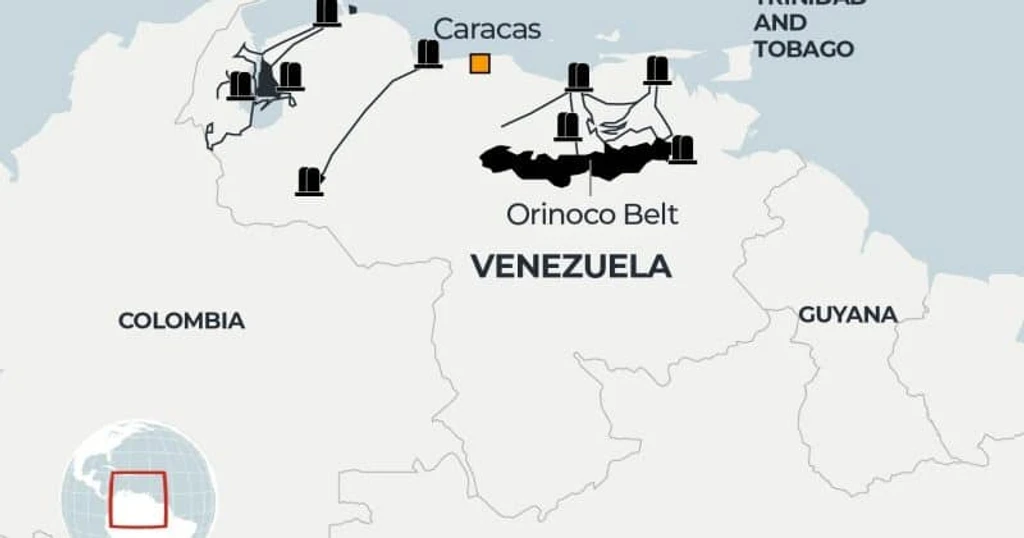
Wall Street is mobilizing for a potential resurgence in Venezuela’s energy sector. JPMorgan Chase and Jefferies Financial Group have begun organizing investor delegations to Caracas, marking the first significant US banking engagement since sanctions began easing. These initiatives target institutional clients eyeing what could be the decade’s most lucrative emerging market opportunity.
The catalyst is President Donald Trump’s aggressive strategy to secure at least $100 billion in private investment to rehabilitate Venezuela’s crumbling oil infrastructure. Following high-level meetings with energy executives in early 2026, these financial institutions launched their outreach efforts by June.
Despite holding the world’s largest proven oil reserves, Venezuela’s production has plummeted to under one million barrels per day. Industry analysts estimate that restoring pre-crisis output levels will require approximately $10 billion in annual investment over the next ten years.
However, a stark divide exists between financial enthusiasm and operational reality. Major integrated oil companies remain cautious. ExxonMobil CEO Darren Woods has publicly labeled the current environment “uninvestable,” citing severe legal, commercial, and political risks associated with the state-owned PdVSA. ConocoPhillips shares this skepticism, emphasizing the need for robust contractual protections.
Conversely, hedge funds are moving quickly. Elliott Investment Management, led by Paul Singer, is actively pursuing distressed Venezuelan assets, including a bid for Citgo, the US-based refining subsidiary of PdVSA. The political shift following the removal of Nicolas Maduro in January 2026 has provided the opening distressed debt specialists were awaiting.
For major operators to commit capital, Venezuela must implement comprehensive reforms. Key requirements include restructuring PdVSA’s governance, establishing clear legal frameworks for foreign entities, protecting property rights, and ensuring reliable contract enforcement. Until then, the market remains two-tiered: fast money from hedge funds is deploying, while slow money from major oil producers continues to scrutinize the fine print.