Prediction market Kalshi is facing a class action lawsuit over its "death carveout" policy concerning a market for the ouster of former Iranian Supreme Leader Ali Khamenei. Plaintiffs allege the policy was not properly disclosed to users and that winning trades were not paid out.
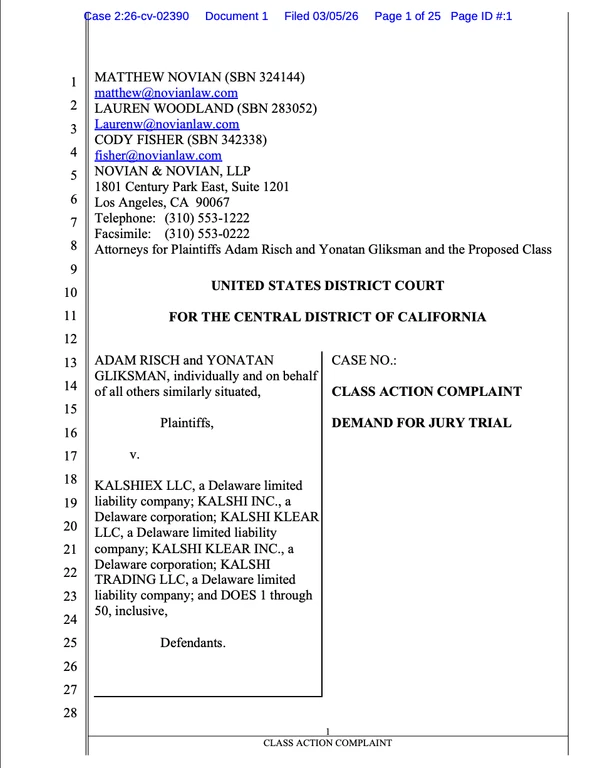
The lawsuit claims the "death carveout" was not incorporated into user-facing rules summaries and was not displayed to "reasonable consumers." Kalshi acknowledged prior disclosures were "grammatically ambiguous."
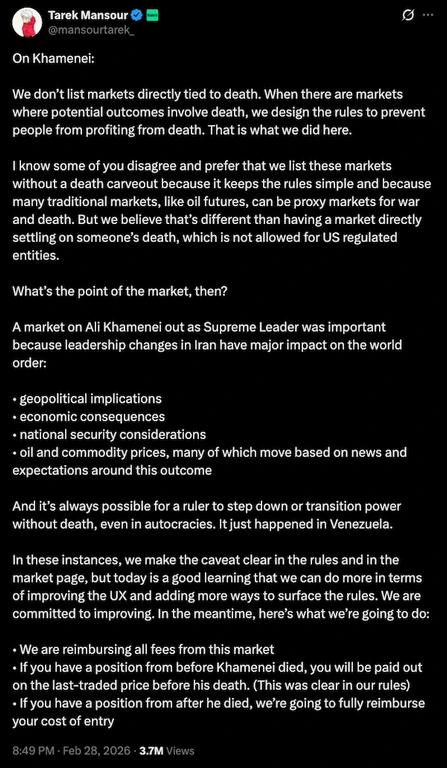
Kalshi voided trading positions after Khamenei's death was confirmed, meaning the market did not resolve to "yes." Co-founder Tarek Mansour stated Kalshi does not list markets directly tied to death and designs rules to prevent profiting from such events.
Plaintiffs characterized the carveout policy as "predatory" and an "unfair" business practice, noting that with military tensions high, consumers understood death was the most likely mechanism for Khamenei to leave office.
Mansour announced reimbursements for affected users, calculated using the "last traded price" before Khamenei's death was confirmed. However, this policy also faced user pushback, with plaintiffs questioning the transparency of the methodology and timestamps used for calculation.
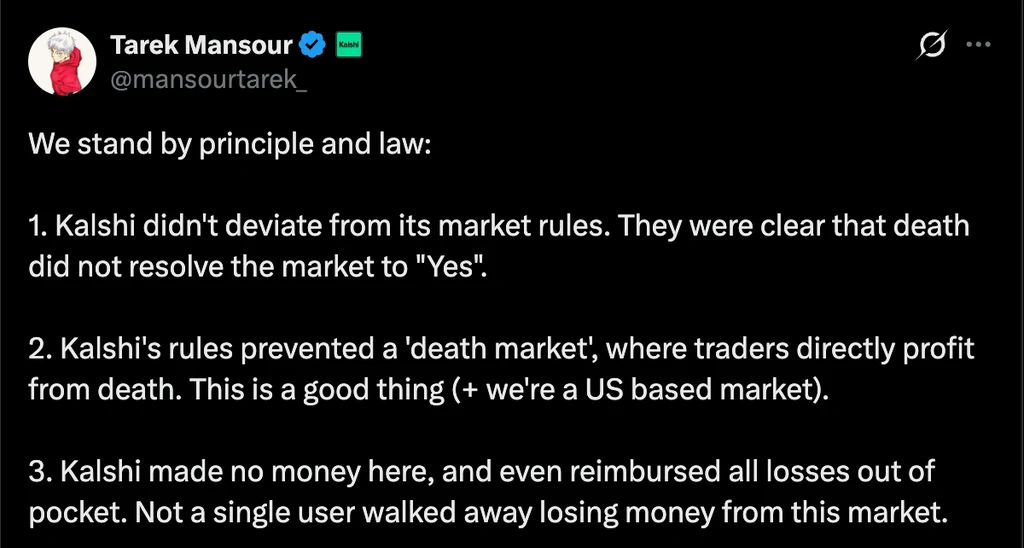
Mansour maintained Kalshi adhered to its policy against "death markets," stating it was clearly outlined in market rules. He added that Kalshi made no profit and reimbursed all losses, ensuring no user lost money.
This situation arises as trading volumes on prediction markets have surged to record highs in 2026.