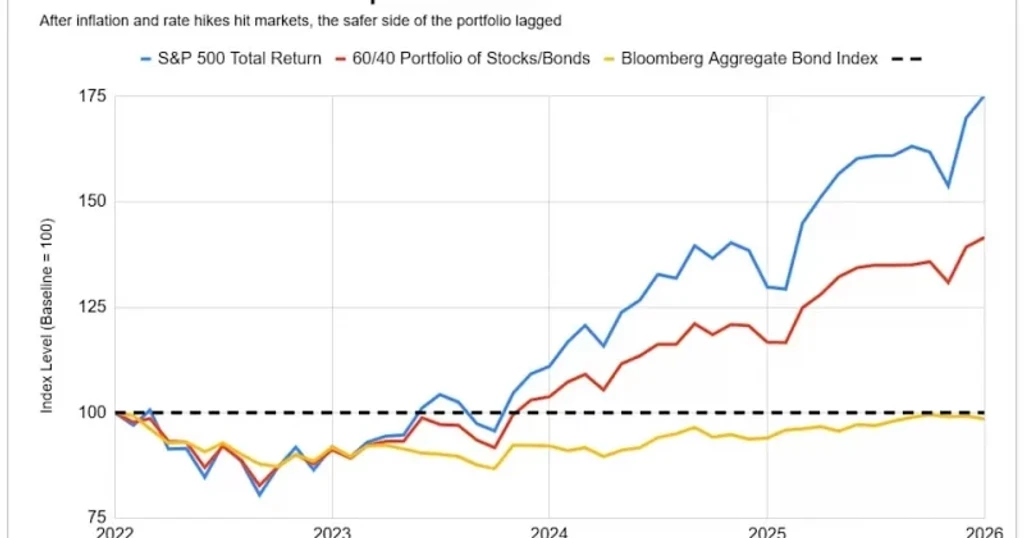
US Treasuries found their footing after weeks of turbulence, with bond prices stabilizing as a key inflation gauge came in softer than Wall Street had braced for. The recovery marks a notable shift from the aggressive selloff that gripped fixed income markets when oil prices surged on Middle East tensions.
The headline CPI number for April 2026 hit 3.8% year-over-year, up from 3.3% in March. But core CPI, which strips out volatile food and energy costs, held at 2.8%. That was enough to stop the bleeding in bond markets.
The selloff that preceded this recovery wasn’t subtle. Brent crude rose above $100 per barrel for the first time in four years, driven by tensions centered on Iran and potential disruptions around the Strait of Hormuz. Energy costs in the April CPI report jumped 17.9%.
That oil shock rippled straight into Treasuries. The 10-year yield climbed above 4.5%. The 30-year yield briefly topped 5%. Global bond markets joined the rout, with Japanese government bond yields hitting record highs.
The core CPI reading at 2.8% told a different story. It suggested underlying price pressures, the kind that influence Federal Reserve policy, weren’t accelerating at the same pace. Markets had been revising their rate cut expectations downward as inflation risks mounted. The softer core reading didn’t reverse those expectations entirely, but it did pump the brakes on the most hawkish scenarios.
Oil prices retreating from their highs helped too. Brent pulled back from above $100, though it remained elevated compared to levels seen earlier in the year.
For crypto investors, the correlation between rising yields and Bitcoin weakness has become a reliable pattern. When a 10-year Treasury offers 4.5% with essentially zero credit risk, the opportunity cost of holding a non-yielding, volatile asset like Bitcoin goes up. With fewer rate cuts expected, the monetary policy tailwind crypto bulls have been counting on keeps getting pushed further into the future.