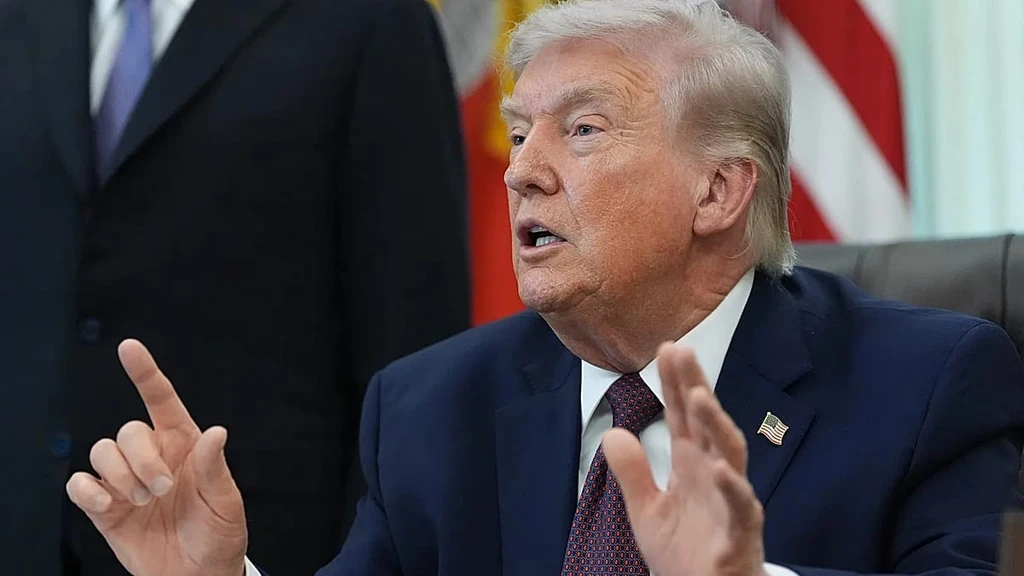
President Donald Trump signed an executive order Thursday authorizing tariffs of up to 100% on imported patented drugs, targeting companies that refuse to negotiate pricing agreements with the administration.
Companies that sign a "most favoured nation" pricing deal and build U.S. manufacturing facilities face a 0% tariff. Those building facilities but without a deal face a 20% tariff, escalating to 100% within four years. Larger firms have 120 days to negotiate; others have 180 days.
The administration claims the move addresses national security risks from foreign pharmaceutical dependence. Seventeen pricing deals have been reached, including with Pfizer, Eli Lilly, and Bristol Myers Squibb.
The EU, Japan, South Korea, and Switzerland will pay a 15% tariff; the UK will pay 10%, with a path to zero under future agreements.
!
Separately, Trump updated metal tariffs, now calculating duties on steel, aluminum, and copper based on the full customs value of imports. Products containing over 15% by weight of these metals face a 25% tariff; those below 15% are subject to country-specific rates.
The orders invoke Section 232 of the Trade Expansion Act, the same authority used for tariffs on cars, lumber, and cabinets. Analysts warn of supply chain disruption and higher costs for consumers, even as Trump frames the policy as restoring American manufacturing.
The Supreme Court recently struck down tariffs imposed under a different legal framework, but Trump retains multiple executive levers to impose new duties.