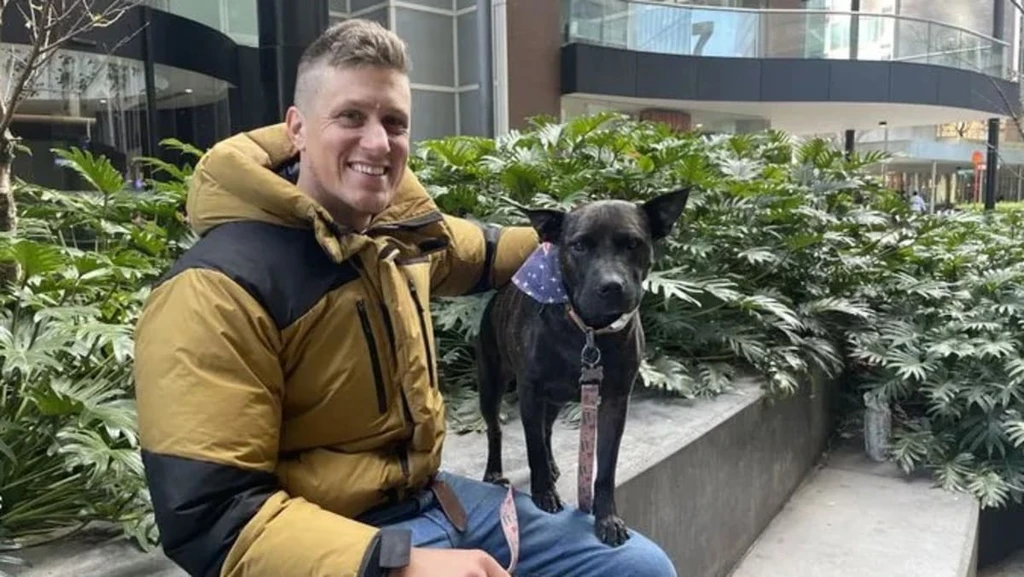
HONG KONG - In a bid to save his sick dog, Australian AI consultant Paul Conyngham used ChatGPT and other AI models to design a personalized mRNA treatment.
His eight-year-old rescue dog, Rosie, suffering from mast cell cancer, is now in partial remission after receiving the custom immunotherapy in December.
Conyngham spent months researching therapies using AI platforms including ChatGPT, Gemini, and Grok. He paid US$3,000 to sequence Rosie’s genome and analyzed the data with AI assistance.
He then turned to AlphaFold, the Nobel-winning protein-prediction tool, to understand a mutated gene. Following AI-recommended leads, he enlisted scientists from the University of New South Wales (UNSW) and the University of Queensland to produce and administer the vaccine.
Rosie’s condition had been misdiagnosed multiple times before a 2024 biopsy confirmed terminal cancer. Standard treatments failed, prompting Conyngham to pursue emerging mRNA therapy options.
“This was not a clinical trial,” said UNSW professor Martin Smith, who sequenced Rosie’s genome. “It was really driven by his determination.”
The effort combined three cutting-edge technologies-genome sequencing, AI, and RNA therapeutics-to create a new pathway in pet oncology.
Still, experts caution that results remain uncertain. While Rosie’s largest tumor shrank significantly, not all tumors responded. She has since undergone another surgery, and her prognosis remains unclear.
Pall Thordarson, director of UNSW’s RNA Institute, noted that Conyngham used AI to draft the mRNA sequence, which was then refined and produced by his team.
Experts say the case highlights AI’s growing role in accelerating biomedical research-but stress that rigorous testing and peer review are still required before such methods can be applied broadly.