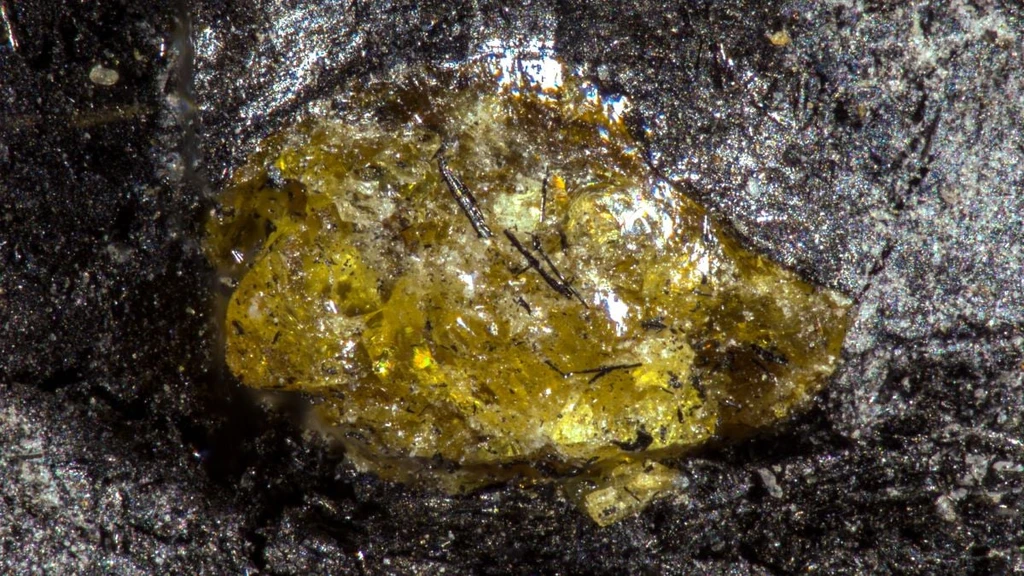
Paleontologists have discovered the world's oldest amber in a Chinese coal deposit, pushing the record back by 65 million years.
The microscopic fragments date to the Middle Devonian period, 385 million years ago. That is 150 million years before the first dinosaurs appeared.
The find challenges previous assumptions. It shows that complex, chemically sophisticated resin production evolved in non-seed plants, not in later seed plants.
Researchers from the Chinese Academy of Sciences identified the amber using ultraviolet light, which caused the tiny pieces to fluoresce.
Chemical tests confirmed the substance has the hallmarks of conifer-type resin. This suggests early plants developed defensive capabilities against threats like wildfires and fungi long before insects became major plant grazers.
The discovery indicates that resin production was a key evolutionary innovation, helping early vascular plants colonize and transform terrestrial landscapes.