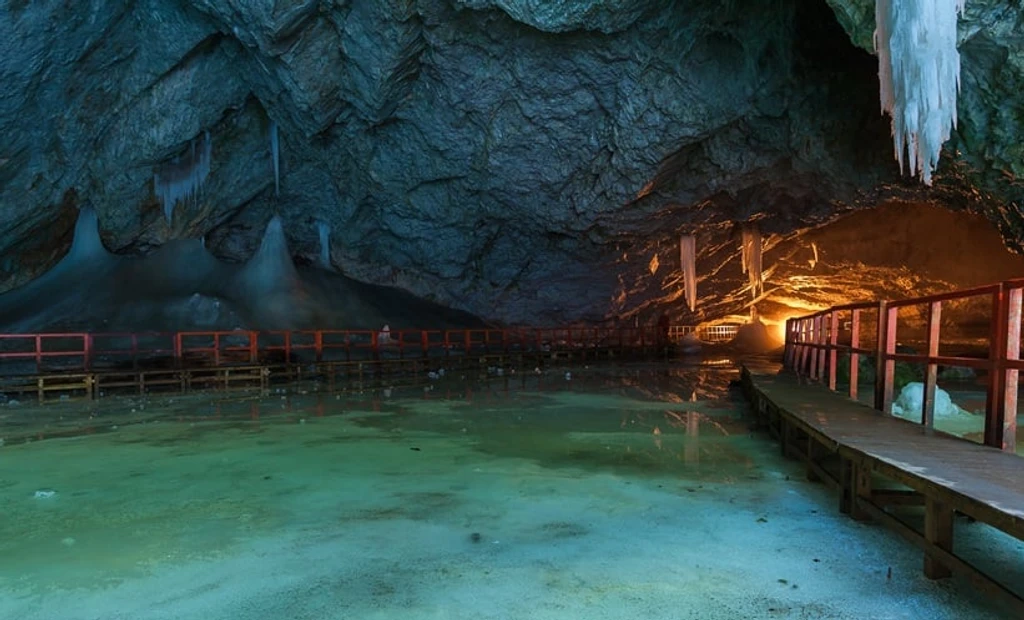
Scientists have discovered a bacterium in 5,000-year-old ice from Romania's Scarisoara Ice Cave that shows resistance to many modern antibiotics. The organism, Psychrobacter sp. SC65A.3, carries over 100 genes linked to antimicrobial resistance and can survive drugs used for serious infections like tuberculosis and UTIs.
Researchers drilled a 25-meter core to isolate the bacterium, finding it resistant to 10 antibiotics across eight classes, including narrow-spectrum drugs like clindamycin and broad-spectrum ones like trimethoprim. These are commonly used for infections of the lungs, skin, bloodstream, and reproductive system.
Interestingly, the bacterium also inhibited the growth of 14 ESKAPE pathogens, a group of bacteria known for causing life-threatening hospital-acquired infections. Genetic analysis revealed nearly 600 genes with unknown functions, suggesting potential for novel biological discoveries.
The discovery offers a unique glimpse into ancient microbial ecosystems and highlights the potential for finding new biotechnological and medical applications from these ancient microbes. This is the first whole-genome sequence from millennia-old cave ice, providing insights into ancient resistomes and antimicrobial potential.