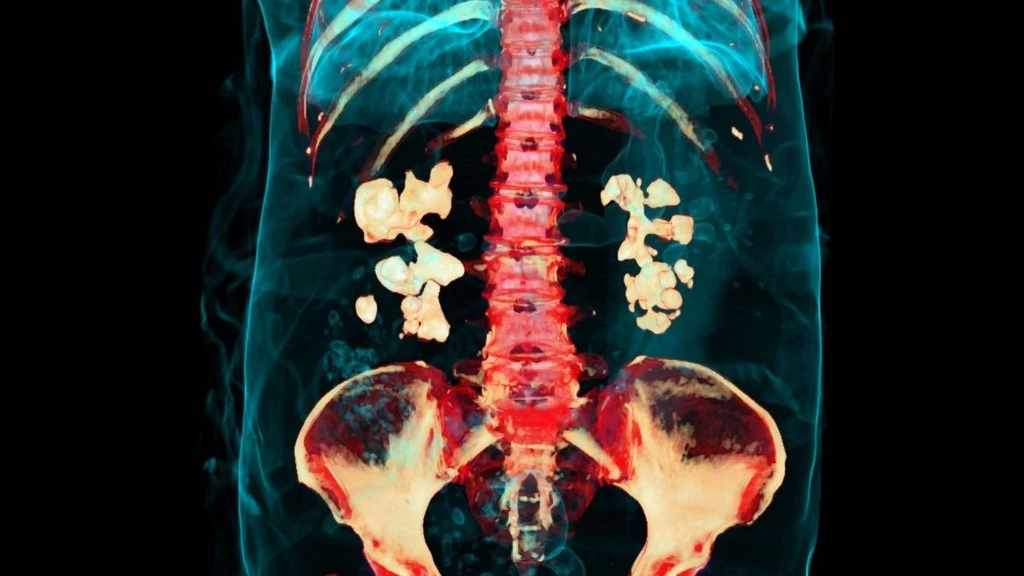
Colored CT scan of a patient with bilateral kidney stones (white).
Researchers in the US have discovered live bacteria and biofilms within calcium oxalate kidney stones, the most common type, which accounts for nearly 80 percent of cases. This finding challenges the long-held medical assumption that these stones form solely through mineral crystallization from urine.
Urologist Kymora Scotland from UCLA stated that this breakthrough indicates bacteria can reside inside stones and actively contribute to their formation, opening new avenues for therapeutic strategies targeting the microbial environment.
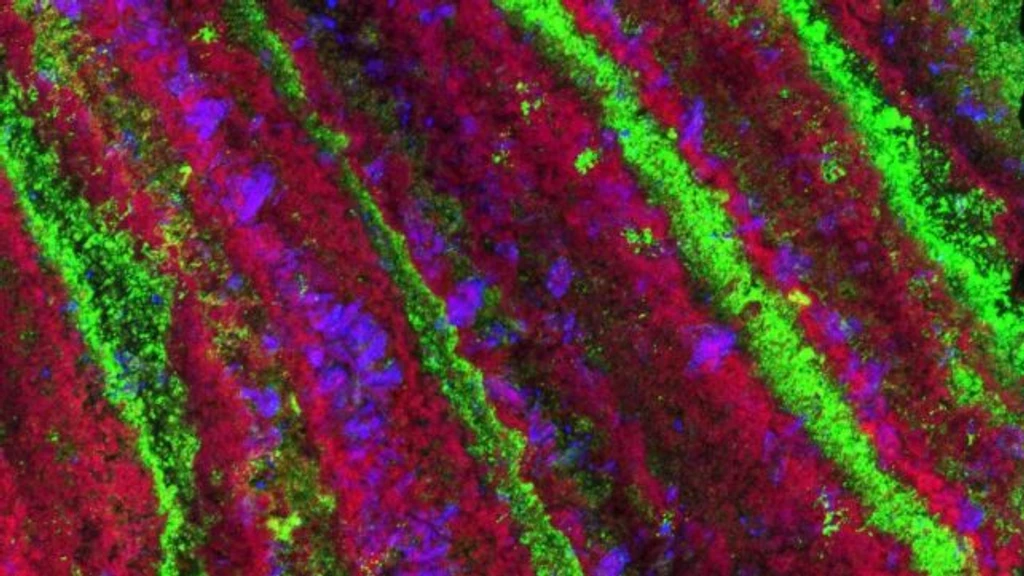
While bacteria are known to cause rarer struvite kidney stones, their presence within common calcium stones was previously unknown. Using advanced microscopy, scientists found bacteria and biofilms embedded within the stone crystals.
Bacterial-biofilm components identified within kidney stones.
The study suggests kidney stones can be viewed as an "organic-inorganic biocomposite." Future research aims to clarify the precise interaction between bacteria and stone formation, and identify factors contributing to recurrent stone development.