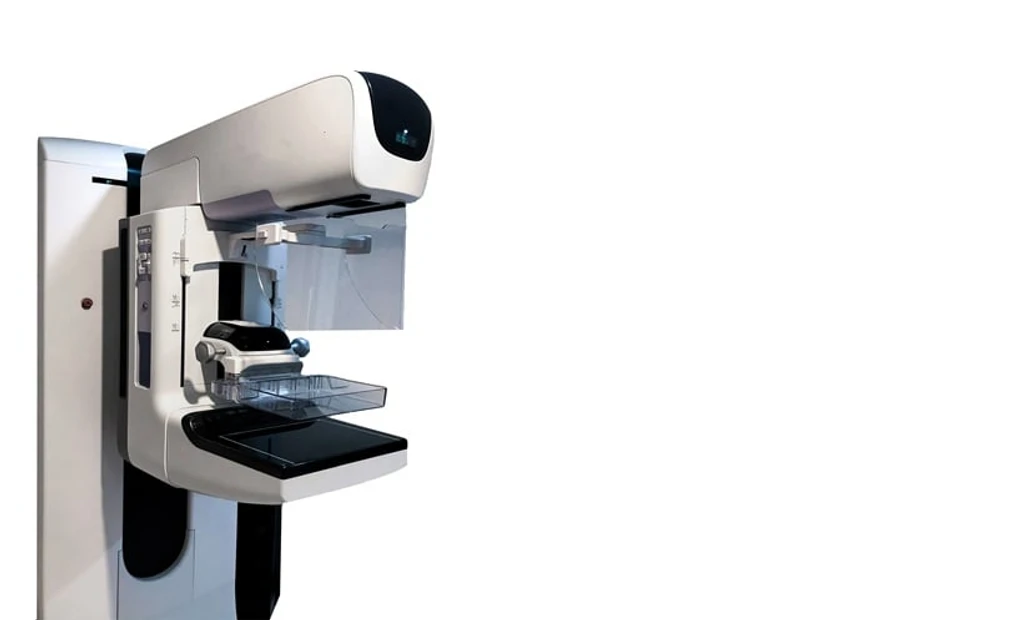
A new meta-analysis suggests contrast-enhanced mammography (CEM) may offer a practical, accessible alternative to MRI for assessing breast cancer response after neoadjuvant therapy.
Published in Radiologia Medica, the systematic review pooled 15 studies with 793 patients. It found CEM showed moderate-to-high diagnostic performance, with 74% sensitivity and 82% specificity for detecting pathological complete response (pCR) after neoadjuvant therapy. The negative predictive value was high at 87%, suggesting that a lack of abnormal enhancement on CEM strongly reduces the likelihood of residual disease.
Neoadjuvant therapy, used to shrink tumors before surgery, relies heavily on accurate imaging to guide surgical planning. While MRI is the current gold standard, its use can be limited by cost, accessibility, and patient tolerance. CEM, which combines standard mammography with a contrast agent to visualize tumor blood flow, offers functional and anatomical detail in a single exam and is generally faster and less expensive than MRI.
However, the analysis also highlighted limitations. CEM's moderate positive predictive value (66%) means it cannot replace biopsy to confirm pCR. Histopathology remains essential, especially for detecting residual disease in lymph nodes or subtle tumor bed changes.
Researchers call for larger, multicenter studies to standardize protocols and interpretation criteria. For now, CEM is a promising tool when MRI is not viable-but only as part of a multimodal assessment strategy.