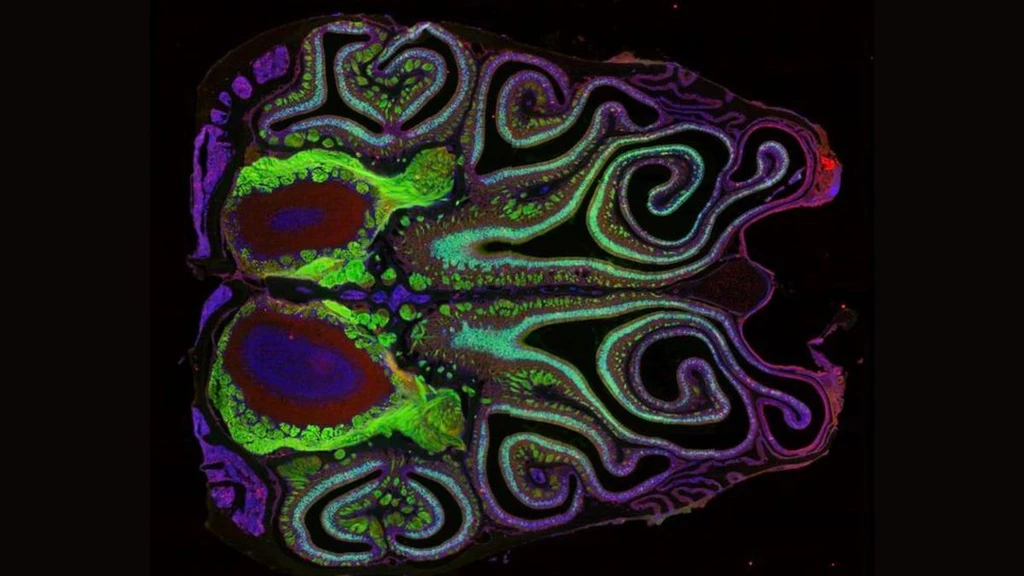
Scientists have mapped olfactory receptors in the mouse nose, revealing they are not randomly distributed but organized into distinct bands. Each of the mouse's 1,172 scent receptors, expressed by individual neurons, plays a role in detecting specific smells.
This organization mirrors sensory mapping in other senses like hearing and vision. Researchers utilized single-cell sequencing and spatial transcriptomics to analyze millions of neurons, identifying over 1,100 smell receptors and their precise locations within the nasal cavity. These spatially organized receptors in the nose correspond directly to specific targets in the brain's olfactory bulb.
The study suggests a molecule called retinoic acid (RA) may guide neurons to express the correct receptor based on their location. Researchers are investigating the order of these receptor stripes and whether similar organization exists in human noses, which possess fewer odor receptors.