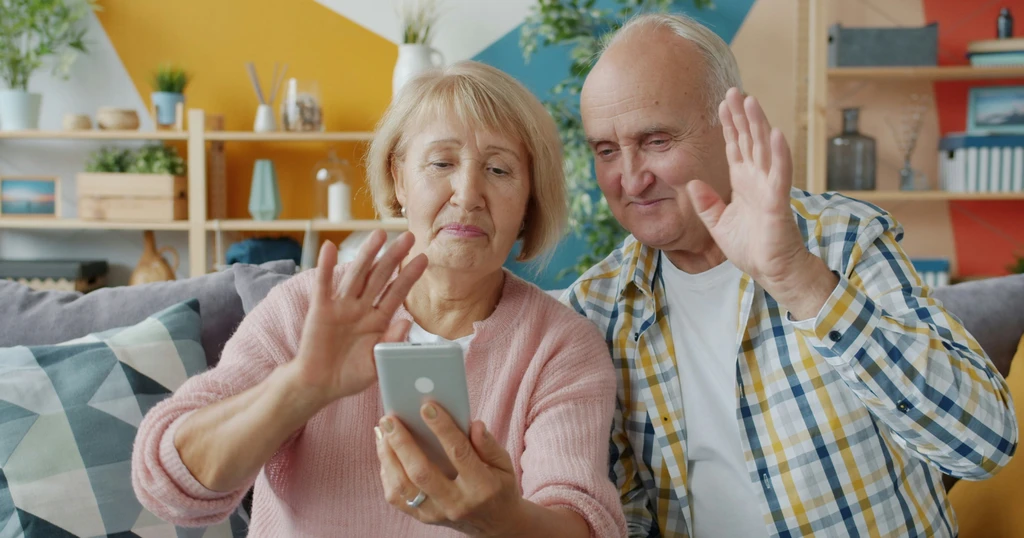
A quiet revolution has reshaped family life. For many, grandparenting now happens through a screen. A grandmother reads a bedtime story from another time zone. A grandfather plays peekaboo with a baby he has never held. What once required a plane now takes a single tap.
Research supports the value of these digital connections. Developmental psychologist Rachel Barr at Georgetown finds video chat is a real relationship tool. Grandparents who video chat frequently and engage in activities like singing report higher perceived closeness to their grandchildren.
But a screen has edges. It carries a face and a voice beautifully. It cannot carry weight, warmth, or smell. A child may know their grandmother's face perfectly but not the scent of her kitchen or the feel of her arms. Video is a supplement, not a replacement for physical presence.
For some families, the distances are stark. One set of grandparents may live in the same country, allowing frequent visits that build an embodied relationship. The other may live on the far side of the world, with the entire relationship living almost entirely on a screen, stitched together from short calls across time zones.
Families are adapting their approach. They keep calls short and playful, built around what delights a young child. Grandparents repeat the same songs, as repetition is what a small child latches onto. They narrate ordinary moments, not just highlights.
They also fiercely protect in-person time. The annual trip home or the long visit becomes the foundation the digital calls rest on. This is the new shape of a modern, scattered family. Loving across distance is a skill everyone is learning together. The face is getting through. The smell will have to wait for the next visit.