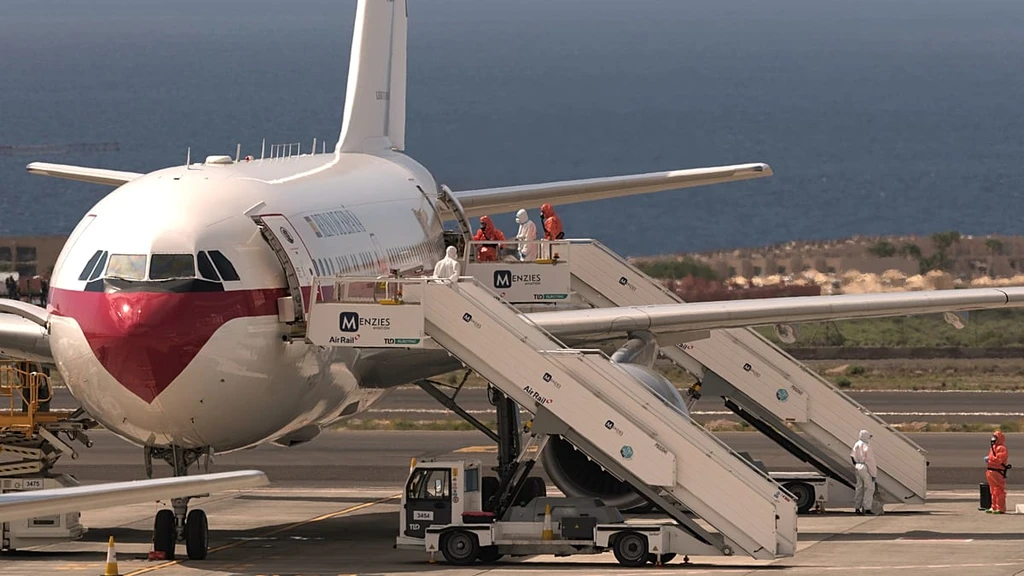
EU ambassadors are in Brussels negotiating coordinated response protocols to a hantavirus outbreak on the MV Hondius cruise ship. The goal is to ensure member states share information and implement comparable health measures within the Schengen zone.
All passengers have been transferred to their home countries, where they will follow national quarantine protocols. The World Health Organization recommends 42 days of supervision starting May 10, but allows countries to adapt these guidelines.
While Spanish passengers are quarantined at Madrid's Gomez Ulla military hospital, those in the Netherlands and Belgium are self-isolating at home. Two passengers, one in France and one in Spain, have shown symptoms and are receiving hospital treatment.
The European Centre for Disease Prevention and Control (ECDC) confirmed that all European passengers have been located and are following necessary medical protocols.
European Commissioner for International Partnerships Joseph Sikela emphasized the need for coordination, stating the outbreak has "reminded us all of our vulnerability when it comes to health."
Health experts stress that hantavirus is not like COVID-19. Trinity College Dublin professor Luke O'Neill advised people not to worry, noting the virus is the known Andes strain, not a new mutation.
WHO epidemiologist Maria Van Kerkhove reassured the public: "This is not SARS-CoV-2. This is not the start of a COVID pandemic." She explained hantavirus spreads through close, intimate contact, not airborne transmission.
ECDC is investigating how passengers were infected, with a hypothesis that the first case was contracted in Argentina before boarding. The agency confirmed there is no reason to suspect a new virus or strain.