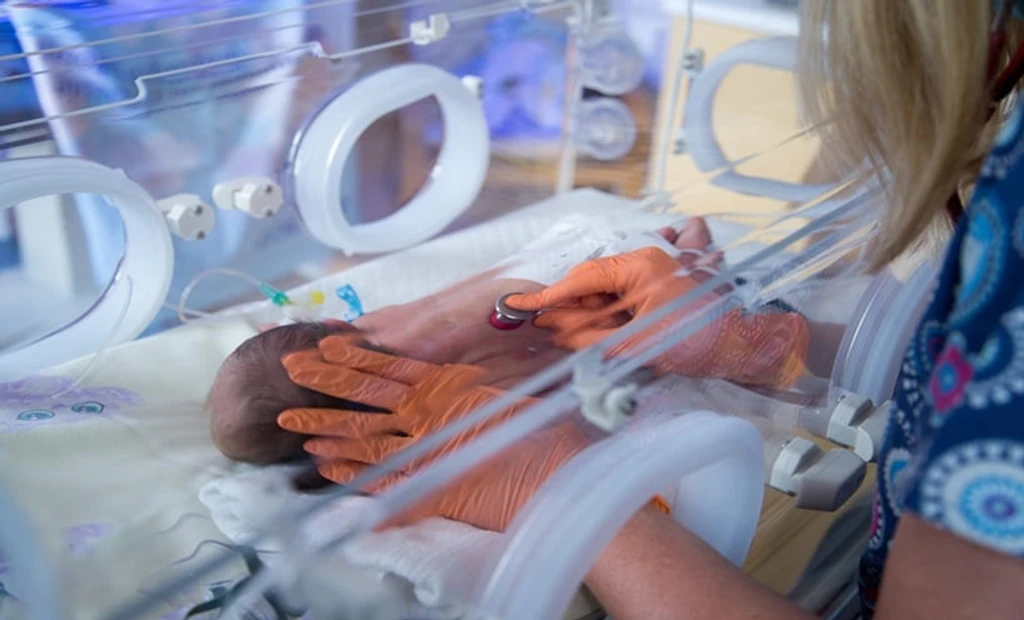
Endovascular stenting has become the standard treatment for native coarctation of the aorta in children and young adults because it is less invasive and associated with faster recovery. However, neonatal CoA continues to be managed surgically due to concerns about vessel regrowth and stent design limitations.
Researchers performed balloon angioplasty and stenting on neonatal CoA samples obtained during surgery. Balloon angioplasty alone was unable to maintain vessel patency; without sufficient permanent deformation, the tissue did not retain the intended lumen diameter.
Conversely, five of six neonatal aortic coarctation samples were successfully treated with stent implantation, with no stent failures reported. Stenting proved a viable approach for achieving the desired lumen diameter.
The study also revealed the highly heterogeneous nature of neonatal aortic coarctation tissue, with marked variation in collagen and elastin content. These microstructural differences influenced tissue response, suggesting treatment may benefit from individualized planning.
Despite stenting’s success, both balloon angioplasty and stenting caused considerable collagen damage. The authors propose that future stenting procedures consider an incremental approach to stent expansion to reduce microstructural injury and potential aneurysm risk.