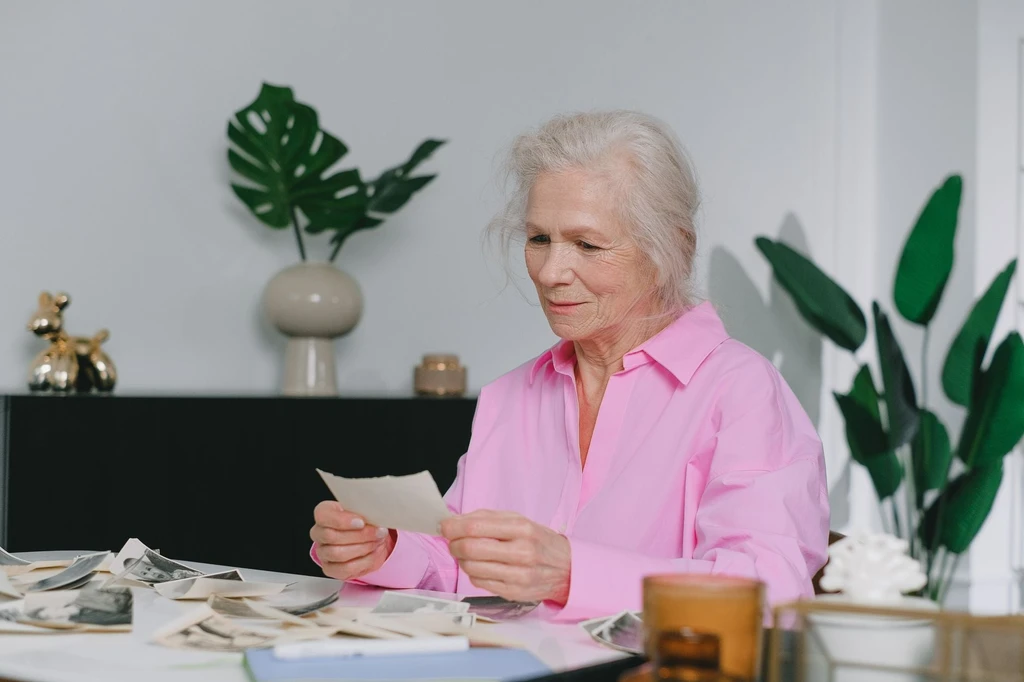
A woman in her late eighties once said, "There's no one left who remembers me as a girl." She had outlived two husbands, a sister, and childhood neighbors. Her body was fine. What had vanished was something else - the silence that follows when the last person who knew the younger you is gone.
Psychologists Robert Kahn and Toni Antonucci described our close relationships as a "convoy" moving through life with us. These are the people who carry the context of who you've been. But with age, that convoy thins faster than it can be refilled. Friends, siblings, partners - one by one, the witnesses leave, and those who arrive later only meet whoever remains.
Daniel Wegner's research on transactive memory shows that couples and old friends divide the work of remembering. One remembers names, the other dates. When those people die, you lose not just them but the parts of your own life they were keeping. There's no one left to say, "I was there, I remember."
Losing physical abilities comes with ramps and hearing aids, a whole system of support. Losing your witnesses has no equivalent. Gerontologists call it "bereavement overload" - losses arriving faster than a person can absorb. Some withdraw, refusing new ties to avoid more pain, deepening isolation.
An enormous amount of money flows into extending lifespan, treating aging as a biological puzzle. But a longer life without those who knew you young only widens the gap. Staying known is the harder problem, and almost nobody is working on it.
Telling your stories to new friends or grandchildren helps, but it's not the same. A story told is not a life witnessed. The people you were born among will go. What remains is a version of yourself assembled from what you can still say aloud, in the company of people who have to take your word for it.