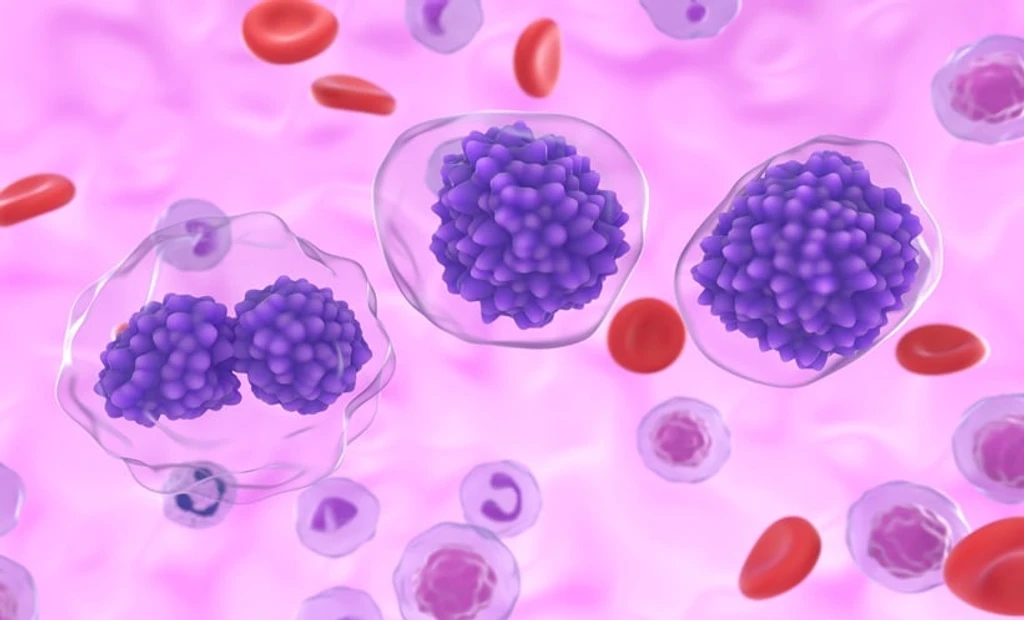
A new study suggests that how quickly lymphocytes recover after CAR-T therapy can significantly influence survival and treatment side effects for patients with diffuse large B-cell lymphoma (DLBCL).
CAR-T therapies have revolutionized B-cell lymphoma treatment, but patient outcomes vary. Researchers investigated if the speed of lymphocyte expansion following lymphodepleting chemotherapy could explain these differences.
The analysis revealed that lymphocyte growth after CAR-T infusion follows an exponential pattern. The rate of this expansion, not the absolute number or peak levels, emerged as the primary determinant of clinical success. A lymphocyte replication rate of 0.3876/day or higher was identified as a significant predictor of improved complete responses and sustained remissions.
Patients meeting this growth threshold experienced significantly longer overall survival, averaging 3.04 years compared to 1.04 years for those with slower growth. However, faster expansion was also linked to increased risk of higher-grade cytokine release syndrome (CRS), a common CAR-T side effect, requiring more frequent management with tocilizumab.
Interestingly, common metrics like peak lymphocyte counts and total lymphocyte exposure did not show a significant association with survival, highlighting the importance of dynamic biomarkers.
These findings underscore lymphocyte replication rate as a critical biomarker for both CAR-T efficacy and toxicity in DLBCL, potentially enabling more personalized treatment strategies and better risk management in this evolving field.