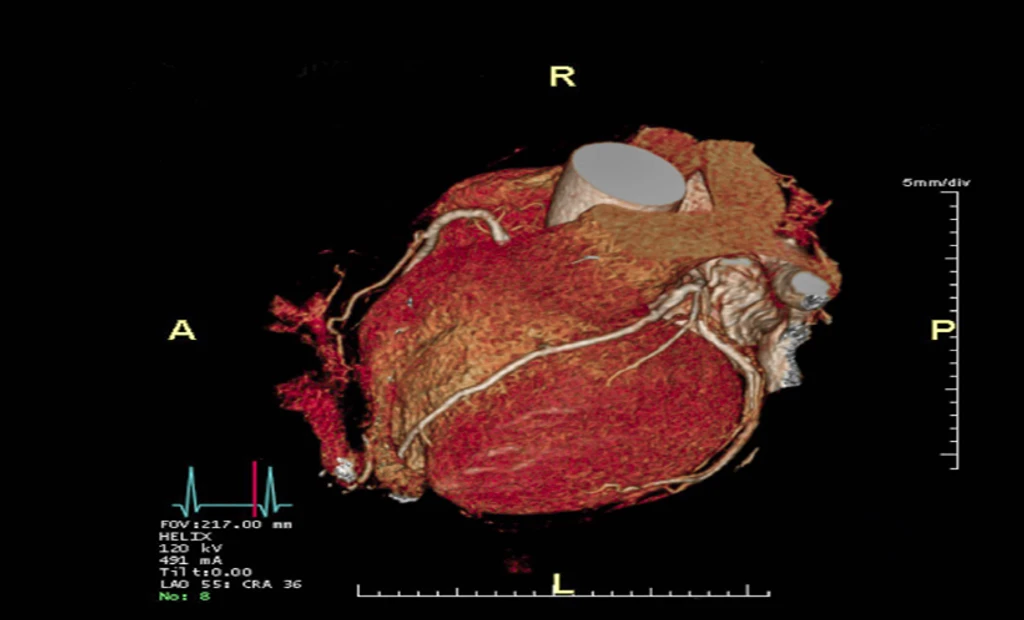
New reference values for left ventricular myocardial strain, derived from cardiac CT feature tracking, reveal distinct sex-based differences in healthy adults. This provides clinicians with improved benchmarks for interpreting cardiac imaging.
Myocardial strain measures how heart muscle fibers deform, serving as an early indicator of dysfunction, potentially detecting abnormalities before conventional measures like ejection fraction. Establishing normal ranges is crucial for clinical assessment.
The study analyzed 128 healthy individuals (47 men, 81 women, median age 50.5) undergoing coronary CT angiography. Females exhibited greater magnitudes of global longitudinal, circumferential, and radial strain compared to males.
Regional variations were also noted across the left ventricle, with the apical slice showing the highest strain magnitudes and the lateral region yielding the largest longitudinal and radial strain values. Circumferential strain was greatest in the septal region.
Both sex and ejection fraction influenced global longitudinal and circumferential strain, while radial strain was linked solely to ejection fraction. The measurement reproducibility was high, confirming the reliability of CT feature tracking.
These findings underscore the importance of interpreting left ventricular myocardial strain measurements in consideration of a patient's sex and the specific myocardial region. This sensitive imaging biomarker can help clinicians contextualize strain data alongside ejection fraction for more precise diagnoses.