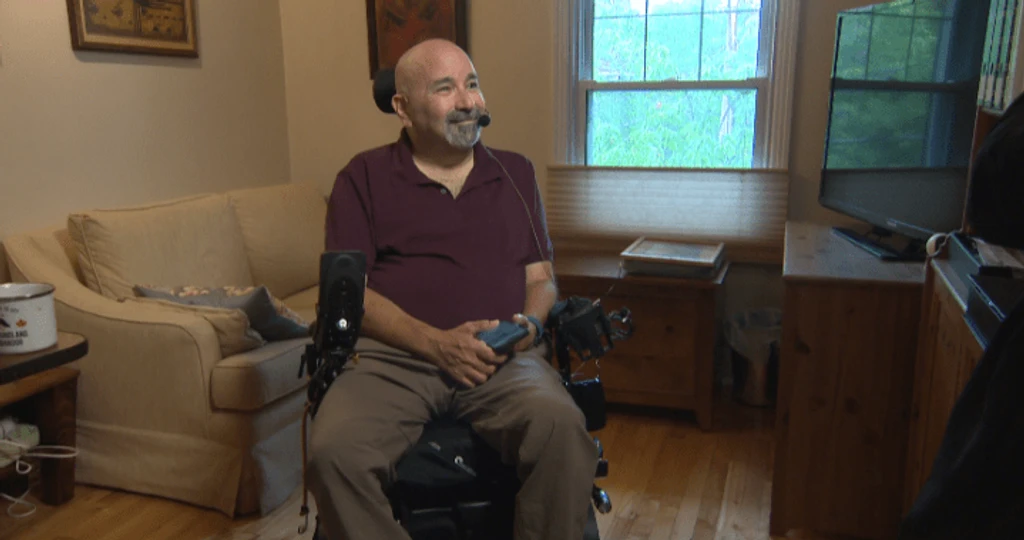
June marks ALS Awareness Month in Canada, highlighting both the persistent challenges of amyotrophic lateral sclerosis and emerging hope through medical advancement. Montreal resident Normand MacIsaac, diagnosed in 2014 at age 51, uses this period to advocate for patients while emphasizing resilience over despair.
MacIsaac describes himself as the luckiest of the unlucky, crediting family support and gratitude for helping him navigate a progressive illness that currently has no cure. A former aid worker with marginalized communities, he now faces the psychological adjustment of depending on others. Assistive technology remains vital yet imperfect, as voice cloning requires time-consuming typing and spontaneous communication proves difficult.
His wife Christine serves as primary caregiver, managing tasks MacIsaac once handled independently. The disease gradually destroys nerve cells controlling voluntary movement, eventually robbing patients of the ability to walk, speak, and breathe.
Despite the grim prognosis, researchers report significant progress funded largely by the viral Ice Bucket Challenge. Dr. Angela Genre of McGill Clinical Research notes the 2014 campaign raised $17.2 million from Canadian donors alone, accelerating biomarker development and drug targeting.
Genre emphasizes early identification as critical for future treatment success. She predicts patient populations will grow as therapies improve, transforming ALS from a fatal diagnosis into a manageable condition. MacIsaac mirrors this optimism, continuing to travel and sharing his experience through writing while remaining deeply connected to the ALS community.