
A groundbreaking study from the University of Nottingham shows that mothers and children exhibit synchronized brain activity during play-regardless of language used.
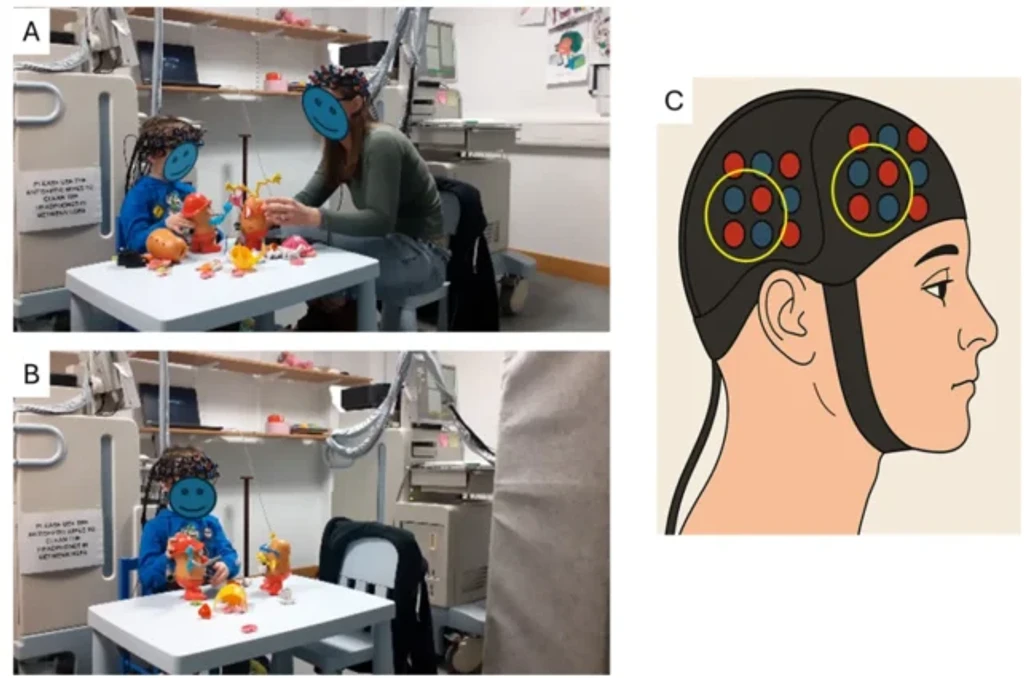
Researchers monitored 15 bilingual pairs using fNIRS caps to track neural patterns in the prefrontal cortex and temporoparietal junction-regions tied to decision-making and social cognition.
Synchrony spiked during joint play in both native and English, outperforming silent independent play. The effect was strongest in the prefrontal cortex, underscoring shared executive engagement.
Despite known emotional distance in second-language use, brain alignment remained robust-challenging assumptions about linguistic barriers in family bonding.
The findings suggest that multilingual environments may strengthen parent-child connection, not hinder it.
Future research should explore synchrony in teacher-student and stranger interactions, and isolate nonverbal cues like eye contact and gestures.