
Point of Care Ultrasound (POCUS) is rapidly becoming an indispensable tool for modern rheumatologists, offering real-time diagnostic capabilities at the bedside. This non-invasive technology enhances diagnostic accuracy, enabling quicker treatment decisions for a wide range of rheumatological conditions, from inflammatory arthritis to large vessel vasculitis.
POCUS provides a dynamic and precise assessment of structures in motion, utilizing Doppler modalities to visualize blood flow in active disease states. This capability is crucial for clarifying discrepancies between patient-reported symptoms and clinical assessments, improving the detection of extra-synovial pathologies like tenosynovitis, and helping to avoid over or underestimation of clinical synovitis. For patients struggling with treatment compliance, real-time visualization of joint status can facilitate crucial discussions about disease management.

In Rheumatoid Arthritis (RA), POCUS can detect subclinical inflammation and joint damage in at-risk individuals, guiding early treatment initiation. It also aids in differentiating between RA and other inflammatory arthropathies like psoriatic arthritis, identifying unique findings in crystal arthropathies such as gout, and assessing conditions like polymyalgia rheumatica. For established RA patients, POCUS serves as an extension of clinical examination, monitoring treatment response and helping to identify the cause of new symptoms.
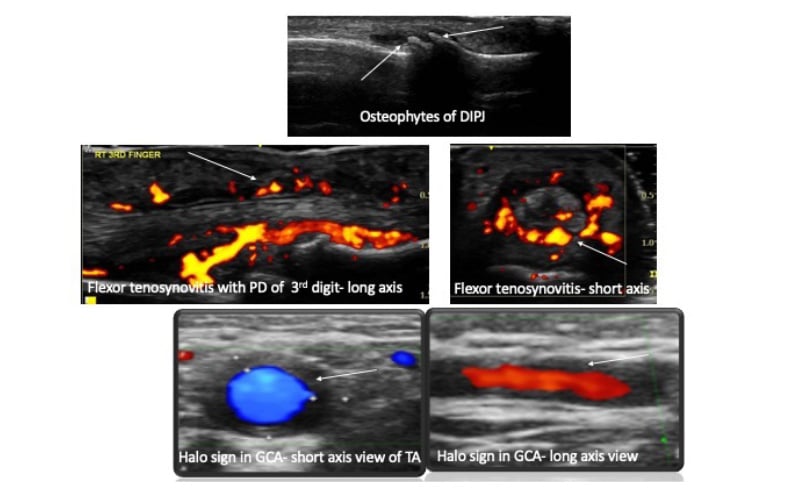
Ultrasound is also a vital tool in diagnosing Giant Cell Arteritis (GCA), recommended as a first-line imaging modality. Integration of POCUS into Fast Track GCA clinics enables rapid diagnosis and treatment, minimizing complications. Furthermore, POCUS assists in the accurate placement of steroid injections, potentially improving short-term outcomes.
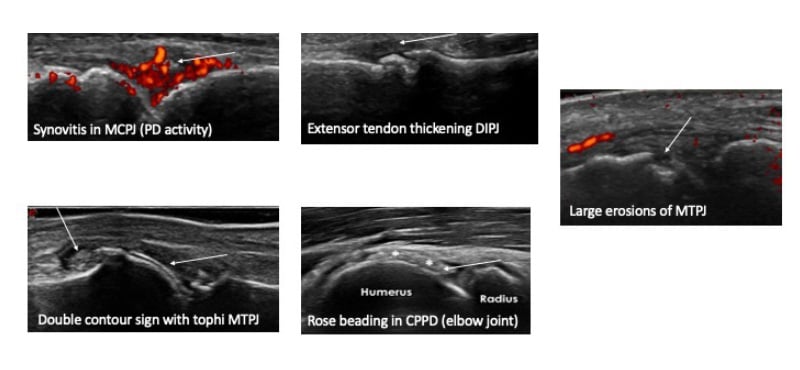
While POCUS offers significant advantages, limitations such as operator dependence and the need for standardized training exist. However, ongoing research and standardization efforts are refining its application. The ability of POCUS to enhance diagnostic efficiency, improve patient education, and ultimately improve patient outcomes solidifies its position as a critical component of modern rheumatological practice, extending far beyond the capabilities of a traditional stethoscope.