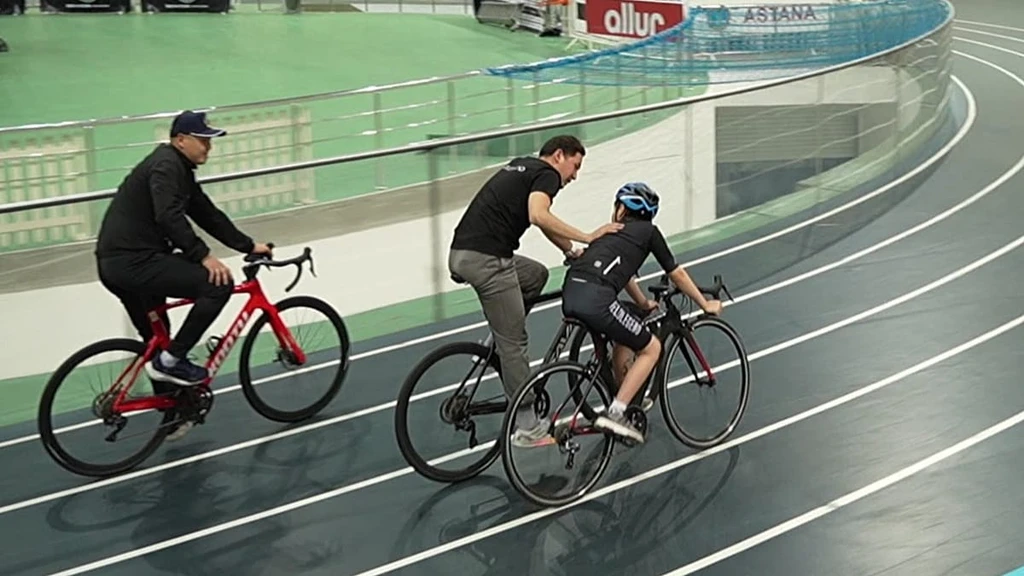
More than 75 million people worldwide have autism spectrum disorder-one in 100 children. While there is no medication to treat it, sport is emerging as a powerful tool.
In Astana, Kazakhstan, 10-year-old Amir was diagnosed with autism at four and is non-verbal. His mother, Fatima Amerzhanova, turned to adaptive cycling when he was six. "Through physical activity, the child starts to calm down, it helps correct aggression and self-aggression," she said. After a summer camp in Turkey, Amir trained individually then moved to a group of 10-12 children. On the 23rd session, he got on a road bike for the first time. "I cried," his mother said.
Coach Kairat Khaldybek trains children with autism at the Velolegend Centre in Astana-one of the few places in Central Asia offering such programs. "We do not select children. We work with everyone, and some are already taking part in competitions," he said. Beyond cycling, sports like swimming, tennis, and running are gaining traction.

Last month, Astana hosted 'Run for Autism,' one of the region's largest inclusive races, drawing about 5,000 participants. Launched by the Bolashak Charity Foundation in 2023, the event has raised over €80,000 for professional education programs for teenagers with autism and Down syndrome. The foundation has also opened 25 inclusion support rooms in schools and colleges across Kazakhstan.
For families in Central Asia, sport is now more than an activity-it's reducing anxiety, building independence, and giving children their first real connection to the world.