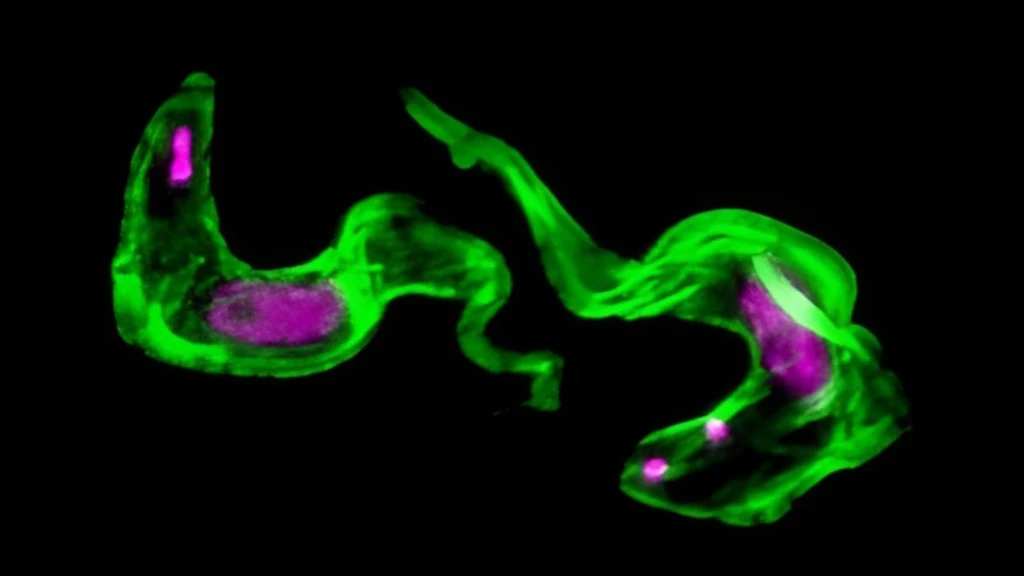
Scientists have unraveled a 40-year-old mystery surrounding the Trypanosoma brucei parasite, the cause of sleeping sickness. This parasite evades the host's immune system by constantly renewing an outer layer of protein, known as VSG. The key to this rapid renewal lies in a newly discovered 'molecular shredder' called ESB2.
ESB2 selectively destroys RNA instructions for less critical proteins while allowing the instructions for VSG production to pass through. This process ensures that VSG can be manufactured at high speed without overwhelming the parasite's cellular machinery. Researchers at the University of York identified ESB2 by tagging proteins within the parasite and genetically editing the parasite to remove ESB2, which resulted in an imbalance of protein production.
This discovery represents a significant shift in understanding how organisms manage genetic instructions. By targeting ESB2, future treatments could potentially disrupt the parasite's survival or make it more visible to the immune system. Sleeping sickness, transmitted by tsetse flies, affects hundreds annually and can be fatal. This breakthrough offers renewed hope for developing more accessible and effective treatments.