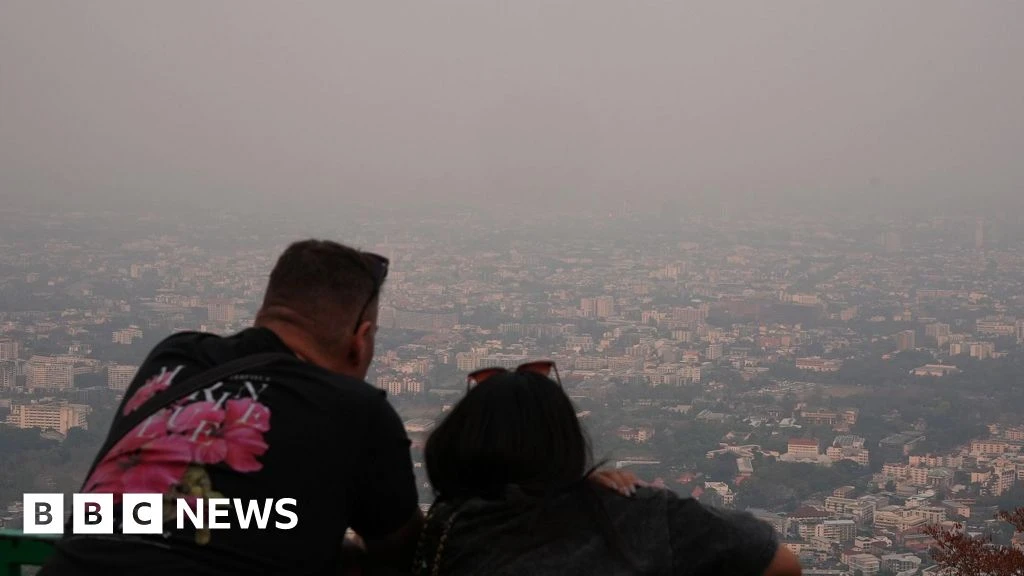
Chiang Mai, Thailand, is grappling with severe air pollution, driving some families to consider moving out of the city. The worsening air quality, particularly during the dry season from November to March, has led to health issues among residents, including frequent nosebleeds in children.
Tirayut Wongsantisuk and his wife moved to Chiang Mai for its cool climate and lush greenery but are now contemplating relocation due to their daughters' health problems. "I've been thinking, maybe we really should move during this time... because if something bad happens to our child, we'll feel terrible forever," Tirayut said.
Satellite data revealed a record number of hotspots across Thailand, mostly in forested areas, contributing to the hazardous haze. Chiang Mai's PM2.5 level was classified as 'very unhealthy,' posing risks such as itchy eyes, nosebleeds, and even heart attacks.
Benjamas Jaiparkan, a public school teacher, sent her children to Phayao province for better air quality and is considering leaving Chiang Mai permanently. She expressed concern about her four-year-old son's lungs, who started experiencing nosebleeds last year. "I feel so sorry for him because I don't know how much more his lungs can take," she said.
Activists and residents have filed lawsuits demanding government action against pollution. In January 2024, a Chiang Mai court ordered the government to develop an emergency plan to improve air quality within 90 days. Meanwhile, hazardous haze continues to affect other parts of Southeast Asia, with Malaysia and Indonesia experiencing high numbers of hotspots.