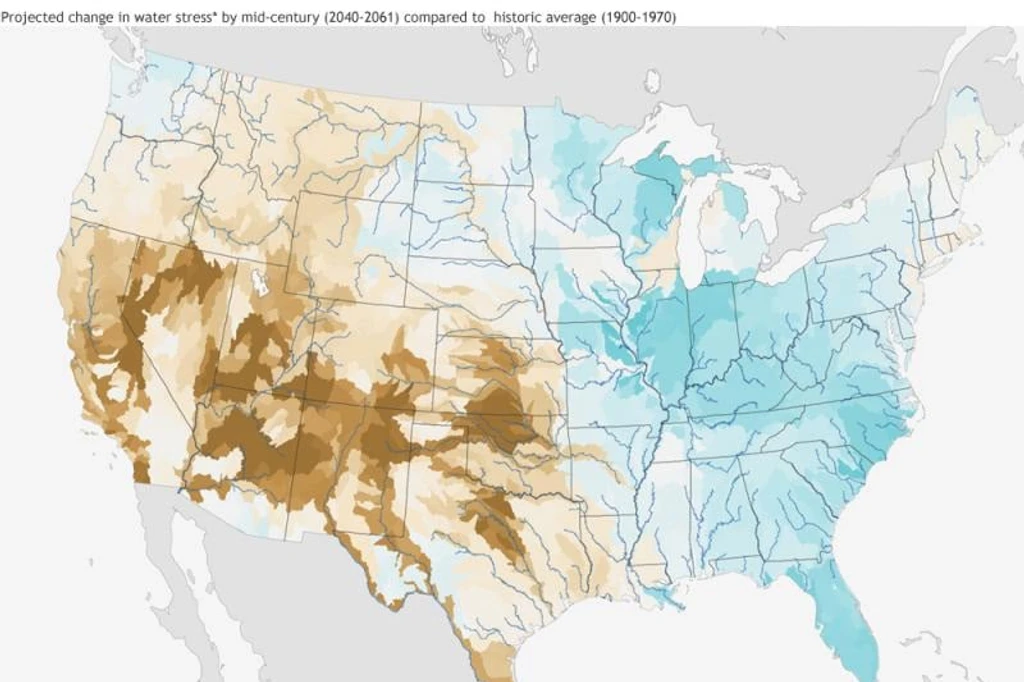
A new Stanford University study warns that hotter, drier conditions from climate change could dramatically increase residential water bills in parts of the U.S., primarily in the West. Researchers found that costly infrastructure projects needed to build drought resilience may force some water bills to double over the next two decades.
The study, published in Nature Sustainability, highlights a direct conflict between climate adaptation and water affordability. It notes that the cost of tap water in the U.S. has already risen three times faster than inflation over the past 20 years.
In one analyzed scenario for Santa Cruz, California, median monthly water bills for the poorest residents could jump from $60 to $111 in today's dollars. This could push more than 5% of households to spend a third of their income on water, forcing painful trade-offs with essentials like food and healthcare.
The research indicates the problem is most acute in water-scarce regions of the West and Southwest, where longer droughts reduce water availability. The authors state that solutions require major state and federal interventions, such as permanent low-income assistance programs, that go beyond what local utilities can provide alone.