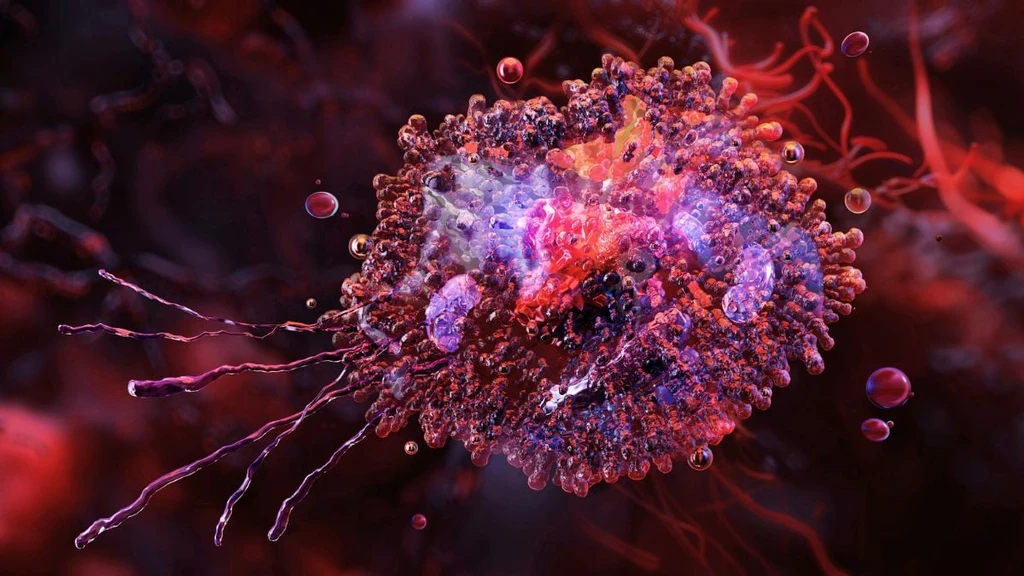
A new study from Kyoto University has traced the evolutionary origins of human blood cells back 700 million years, discovering the genetic machinery predates the rise of animals themselves.
Led by immunologist Hiroshi Kawamoto, the team analyzed transcriptome data across species from humans to sponges and unicellular organisms. They found that the first blood cells were likely scavenger-like macrophages-similar to modern immune cells that engulf microbes.
The key gene, Fos, appears in both animal blood and single-celled organisms. When activated in a unicellular organism, it triggered an amoeba-like state, suggesting the genetic program for macrophage behavior existed before multicellular life diverged.
From this ancestral macrophage, the researchers propose two major evolutionary branches: one leading to mast cells, then T cells, red blood cells, and platelets; the other producing B cells and antibodies.
The findings, published in Proceedings of the National Academy of Sciences, may help unravel disease evolution-and offer a humbling connection to our single-celled ancestors.