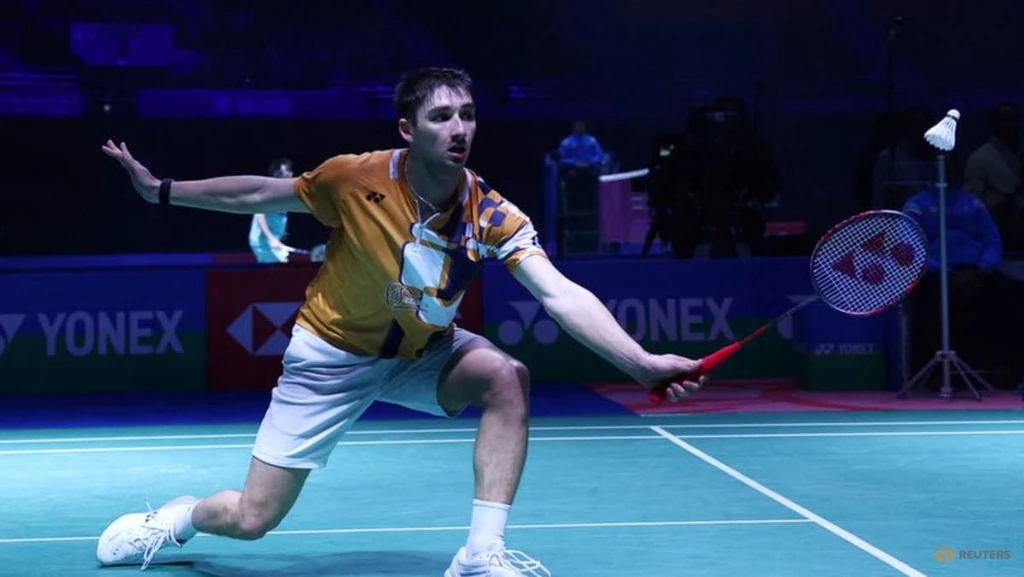
French badminton is targeting future Olympic success. Christo Popov's World Tour Finals victory and a landmark European team crown mark a potential turning point for the sport in France.
Popov won the biggest title of his career in December, and the French men's team stunned Denmark at the continental championships. These breakthroughs are decades in the making, according to the French Badminton Federation's technical director, Cyrille Gombrowicz.
Since badminton's Olympic debut in 1992, Asian countries have dominated. Denmark is the only European nation to have consistently ranked in the top eight medal contenders, while France has yet to medal. However, Gombrowicz believes a strong launchpad is now in place with rising talents like Popov, Alex Lanier, and the mixed doubles pair Thom Gicquel and Delphine Delrue, who secured France's first Super 1000 title last year.
"The next Olympic cycle after the 2028 Los Angeles Games may be the best period for French players," Gombrowicz stated. "Step by step, our goal is to enter the group of the world's top eight badminton nations."
France's resurgence is fueled by a significant expansion in its player base, growing from approximately 3,000 registered players in the late 1970s to around 250,000 today. This mass participation led to the establishment of a national training center in 1990, followed by regional centers and high-performance hubs.
Former men's world number one Peter Gade, who coached France's national team from 2015 to 2018, noted a crucial shift in mentality. "We wanted to move away from short-term thinking and start thinking about becoming the best in Europe, or even one of the best in the world," he said. "That was a big part of our main message: to create belief among players, coaches, and within the system."
Former French player Pi Hongyan highlighted the impact of international coaches. "Now, young players say they want to be world champions or Olympic champions," Hongyan observed. "That changes how hard they work."
Officials and analysts emphasize the importance of sustaining momentum after the 2024 Paris Olympics and enhancing women's badminton. "Government funding (for sport), not only in France but in most countries, depends mainly on medals at the Olympic Games and world championships," said Fernando Rivas, a senior figure in France's coaching setup. "France must balance investment carefully, especially in women's singles, and be smart about when and how to allocate resources to young talents."
Gade stressed the role of the current generation as crucial role models for future talent. "The next generation needs to be built now because it takes many years," he said. "France is fortunate to have such a strong generation right now and these players must serve as role models for the next."