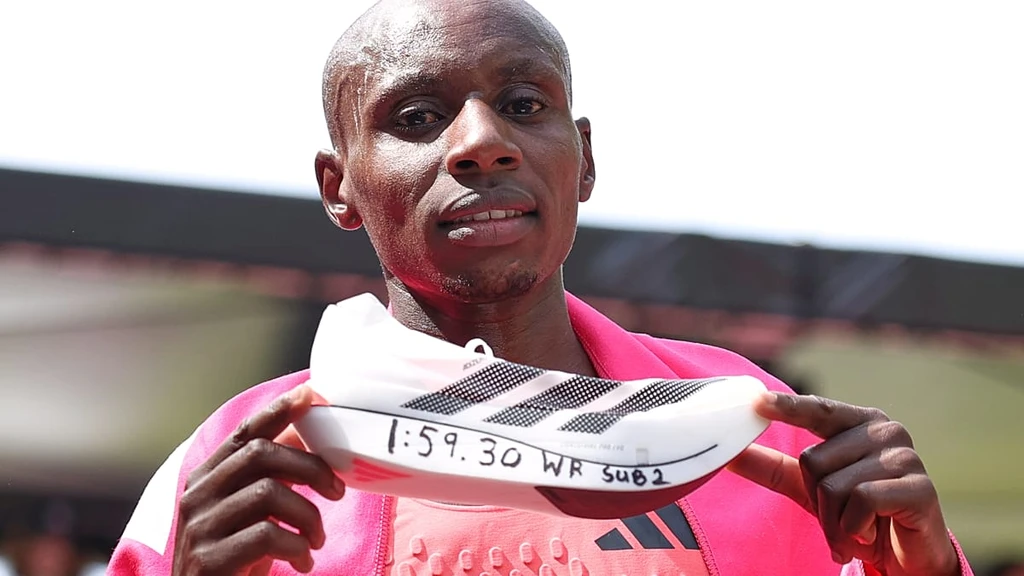
The elite marathon has entered a new era as Sabastian Sawe of Kenya and Yomif Kejelcha of Ethiopia officially broke the two-hour barrier.
Sawe finished in 1:59:30 and Kejelcha in 1:59:41 during the London Marathon. While Eliud Kipchoge previously achieved a sub-2-hour run under controlled conditions, these athletes are the first in an official race.
Experts attribute this milestone to a confluence of factors. Sawe cited the "loved" atmosphere generated by hundreds of thousands of cheering spectators as a significant momentum builder. Running alongside Kejelcha also played a role in Sawe's performance.
Race analyst Adam Jansen highlighted three key contributors: favorable weather (10-15 degrees Celsius with little wind), exceptional athleticism, and technological advancements. Both Sawe and Kejelcha wore new, lightweight shoes weighing approximately 97 grams.
Jansen noted that four of the top five male finishers were sponsored by Adidas, the same brand as the record-breaking shoes. Tigist Assefa also wore these shoes while setting a new women's world record.
Yannis Pitsiladis, Director of the Centre for Exercise Science and Medicine, emphasizes that technology, specifically "supershoes," can improve running economy by over 6%. However, the impact varies significantly among athletes, raising questions about whether records increasingly reflect system advantages rather than pure human physiology and preparation.
Pitsiladis stated, "If access to technology begins to decide outcomes more than physiology, preparation, and talent, then we are no longer just testing the athlete. We are testing the system around them."
As shoe design continues to evolve, further performance gains are anticipated. The London Marathon, while fast, is not the quickest course, with events like Berlin potentially yielding even faster times. The focus now shifts to discerning how much of future improvements will remain purely human.