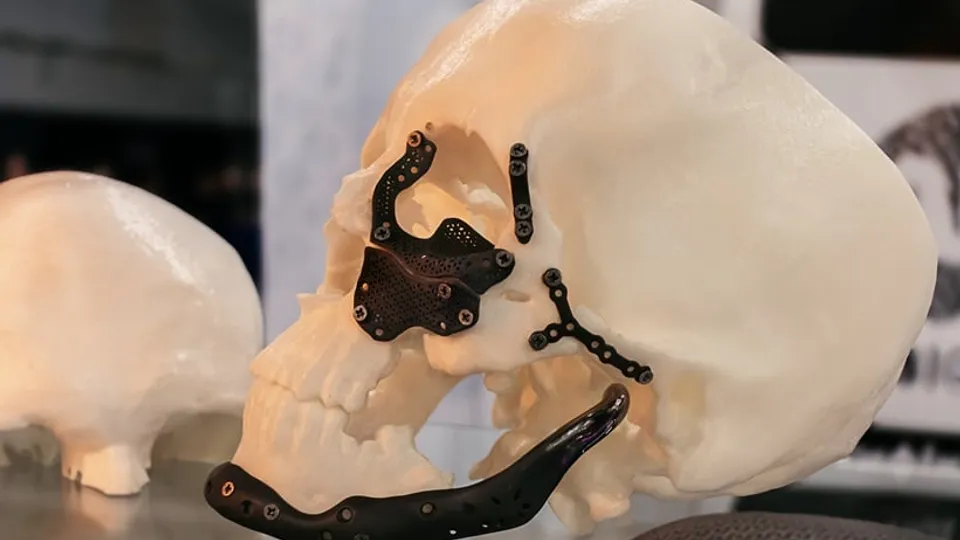
Fused Deposition Modeling (FDM) 3D printing is now a practical and increasingly accessible tool across surgical disciplines. A recent systematic review highlights its versatility and cost-effectiveness in clinical and educational settings, with an expanding range of medical-grade materials available.
Patient data from CT or MRI scans is converted into a standard design format and processed for printing. This technology is proving beneficial in surgical planning, training, and device development. Models enhance preoperative understanding and precision, leading to shorter operating times, reduced blood loss, and increased procedural confidence, particularly in orthopaedic, spinal, and craniofacial surgeries.
3D-printed training models offer repetitive, risk-free practice at a significantly lower cost than traditional methods. The technology is also advancing towards functional, biologically relevant constructs, with thermoplastics being combined with nanoparticles for improved biocompatibility and performance.
FDM 3D printing is the most accessible method, prioritizing sterilization, material availability, and turnaround time. While it offers lower resolution than some other methods, the clinical differences are minimal compared to the logistical and cost advantages.
Despite limitations in direct quantitative comparisons due to study heterogeneity, the review indicates that FDM 3D printing has transitioned from experimental to a widely adopted tool in hospitals. It is particularly favorable for producing patient-specific anatomical models, cutting guides, and training phantoms. The field is rapidly developing, and while standards are still emerging, 3D printing is established as a reliable and cost-effective solution for preoperative planning, surgical training, device prototyping, and experimental biomaterial development.