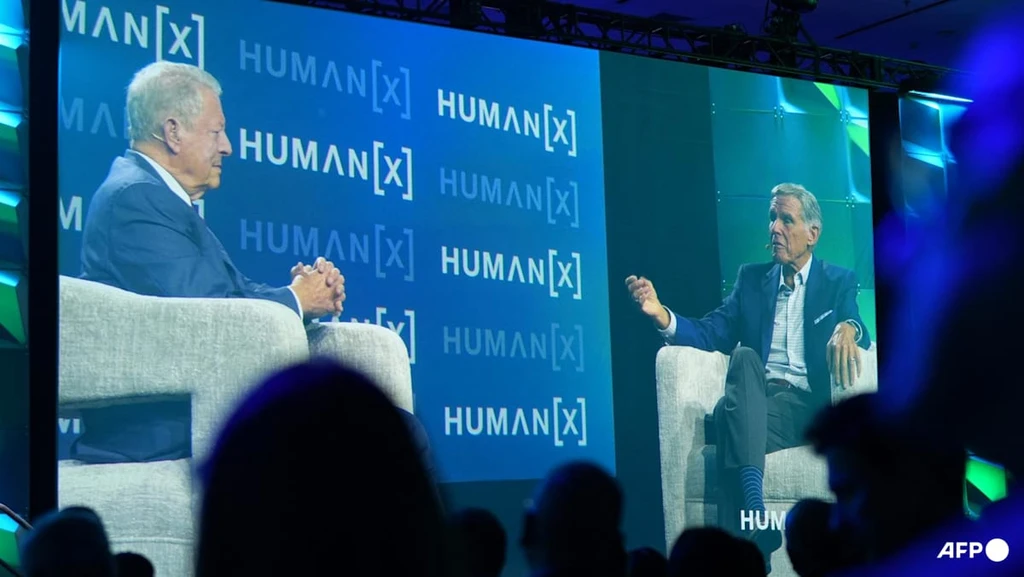
AI industry insiders are urging workers to adapt, but the question of how many jobs artificial intelligence will eliminate remains a central concern. At the HumanX conference in San Francisco, May Habib, CEO of AI platform Writer, noted a "collective panic attack" among Fortune 500 executives regarding AI's impact.
Companies are increasingly citing AI in their layoff announcements. Salesforce reduced customer support staff by 4,000, stating AI now handles half its workload. Block's Jack Dorsey also announced significant headcount reductions due to "intelligence tools."
However, some economists suggest AI is being used to justify layoffs stemming from overhiring or cost-cutting initiatives. OpenAI's Sam Altman has warned of "AI-washing," a sentiment echoed by many speakers who dismissed AI as a pretext for job cuts while acknowledging imminent disruption.
Matt Garman, CEO of Amazon Web Services, stated that AI will "transform every single company, every single job, every single way that we do work." The debate continues, with some, like Nvidia's Jensen Huang, envisioning a future with minimal coding, while others, like Andrew Ng of DeepLearning.AI, argue coding remains vital and AI democratizes it.
Experts emphasize that interpersonal skills, critical thinking, and judgment will become paramount differentiators for employees as AI takes on more tasks. Greg Hart, CEO of Coursera, reported a tripling in enrollment for critical thinking courses.
Florian Douetteau, CEO of Dataiku, described a future where AI agents work autonomously, with human counterparts providing oversight. He expressed concern, however, about a generation potentially never writing a full piece of work independently.
This shift poses challenges for entry-level workers, as AI has automated tasks previously used for on-the-job training. Hiring of candidates with less than one year of experience has significantly decreased in major tech firms.
Former US Vice President Al Gore urged proactive planning for job losses in knowledge work, drawing parallels to the deindustrialization following globalization. He stressed the importance of preparing for AI's consequences to avoid repeating past mistakes.