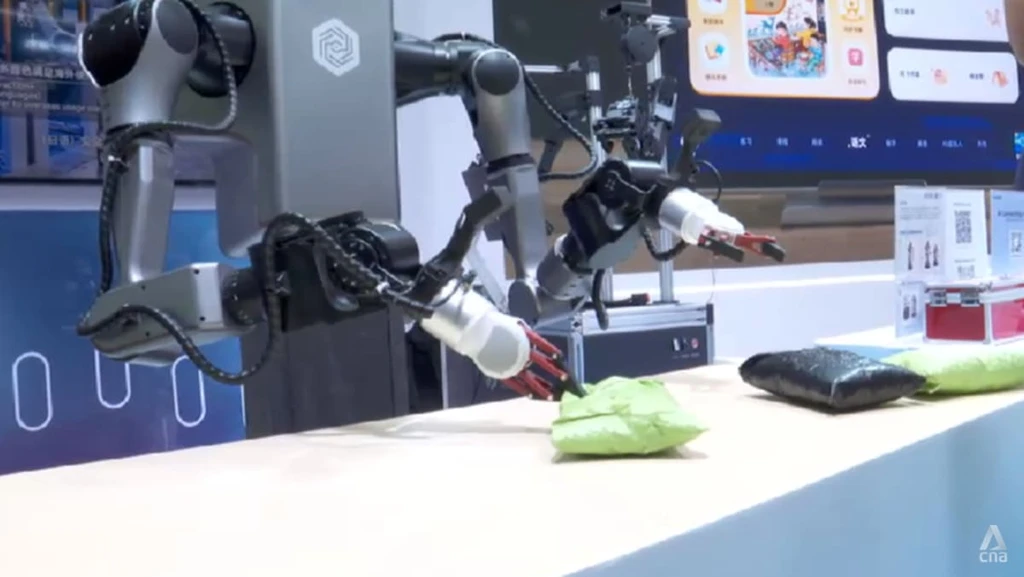
BEIJING: China’s competitive advantage is shifting from low-cost labor to intelligent automation. At the fourth China International Supply Chain Expo in Beijing, a dedicated artificial intelligence zone highlighted how the nation is moving AI from screens into the physical world to secure trade networks.
iFlytek, a leader in speech recognition and large language models, presented embodied AI robotics for logistics. The firm’s technology combines data collection and training into a single system to overcome the shortage of operational data. These systems currently handle warehouse picking and cargo sorting.
Research fellow Hao Jianbin from Shanghai University of Finance and Economics noted that AI connects everything from R&D to downstream applications, making rigid supply chains more predictive and flexible. This resilience is critical as geopolitical uncertainty grows.
Anhui Jiexun Optoelectronic Technology is localizing aggressively to mitigate political risk, planning to expand its international offices to 20. The company uses AI-driven cameras to sort food defects, and is adapting its technology for battery recycling.
Eurasia Group’s Dan Wang noted a survivalist push among Chinese manufacturers seeking overseas profits. Still, European Chamber President Jens Eskelund stressed that foreign companies must embed within China’s supply chain to remain competitive on cost and quality.