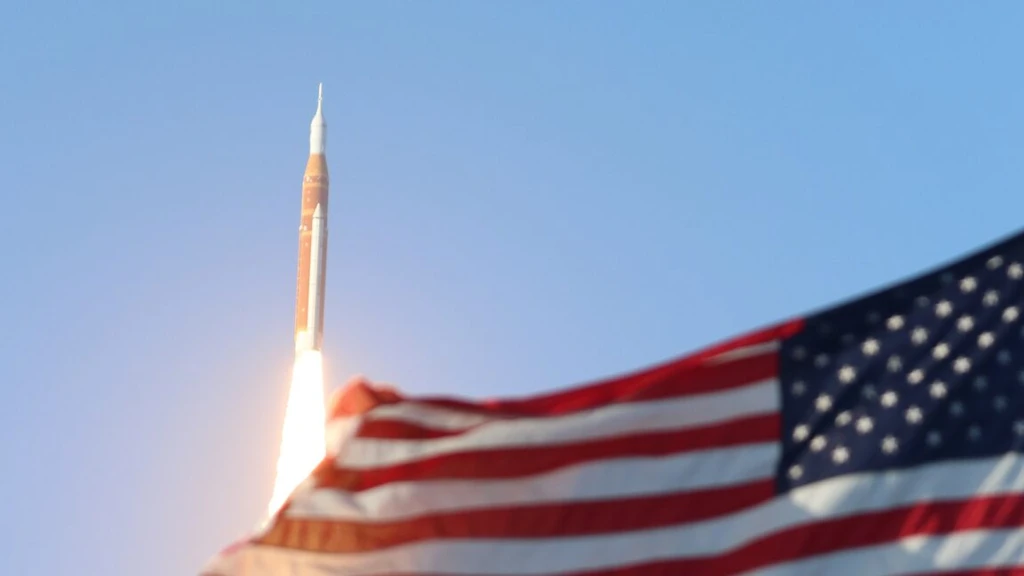
At 6:35 pm EDT on Wednesday, NASA’s Artemis II mission launched from Kennedy Space Center, Florida, carrying four astronauts aboard the most powerful rocket ever built for human spaceflight.
The 322-foot Space Launch System (SLS) generated 8.8 million pounds of thrust, surpassing the Saturn V rocket’s power. Onboard were Commander Reid Wiseman, Pilot Victor Glover, Mission Specialist Christina Koch, and Canadian astronaut Jeremy Hansen.
This uncrewed lunar flyby marks the first time humans have traveled beyond low-Earth orbit since Apollo 17 in 1972. The mission tests critical systems ahead of future Moon landings planned under the broader Artemis program, including Artemis IV targeted for 2028.
Orion spacecraft will follow a free-return trajectory, reaching a record-breaking distance of approximately 252,799 miles from Earth by April 6. The crew will manually pilot Orion during rendezvous demonstrations with the SLS upper stage, evaluating its responsiveness and control systems vital for docking with future lunar landers.
Splashdown is scheduled for April 10 in the Pacific Ocean off California. The mission represents a pivotal step in NASA's goal to return humans to the Moon’s surface and establish long-term presence there.