The focus at Google Cloud Next 2026 was on infrastructure and data pipelines, not just AI models. The core battleground? The agentic control plane - a horizontal layer that moves data between systems.
This control plane, described by theCUBE's John Furrier as the "nerve center" and "backbone" of enterprise systems, is where Google is positioning itself for dominance.
Contextual Data as a Foundation
Contextual data is becoming the bedrock of agentic AI. Google Cloud's VP of Database Engineering, Sailesh Krishnamurthy, emphasized that models lack context without data. To query properly, databases now require operations like graph traversal and vector embeddings in a single system.
OpenText's Waqas Ahmed noted their partnership with Google is building an agentic stack rooted in context engineering - delivering only the relevant information to LLMs. Google's Yemi Falokun added they are integrating the Gemini Enterprise Agent Platform to enable secure, autonomous solutions at scale.
Partnerships for Efficient Infrastructure
Google is partnering with Nvidia and Dell to power AI-ready infrastructure. Muninder Sambi, Google's VP for networking and security, highlighted Google Distributed Cloud as a way to bring Gemini's intelligence to on-premises environments.
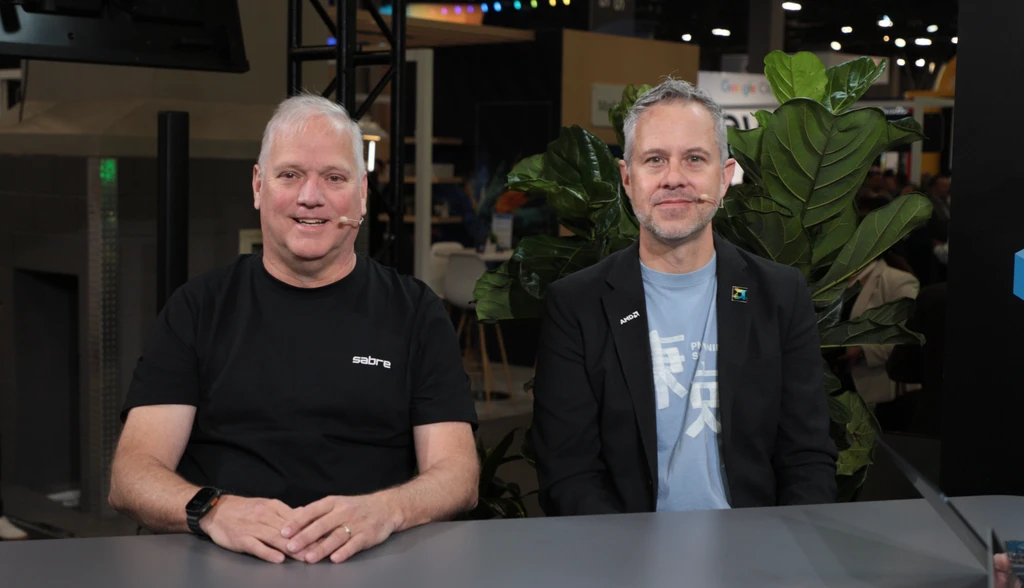
Kubernetes is emerging as the "operating system for AI," according to Google's Drew Bradstock. And x86 remains a stable, cost-effective standard for hybrid environments. Sabre's Tim McArdle reported migrating 50,000 virtual CPUs to AMD-based instances on Google Cloud, yielding savings that fund new AI initiatives.
Google has committed $750 million to build a partner ecosystem of over 120,000 members.
Tackling Tough Use Cases
McKinsey's Asutosh Padhi advised companies to start with complex business problems to demonstrate value, not simple side projects.
Covered California, the largest U.S. state-based health insurance marketplace, partnered with Deloitte and Google on an AI project using Document AI. It saved an estimated 24,000 hours annually, with verification times dropping from 72 hours to seconds. Covered California's CTO, Shilpa Akunuri, noted this allowed staff to focus on high-value customer support.
Deloitte's Vishal Prabhu summarized: "Technology is doing the heavy lifting and people can focus on people."