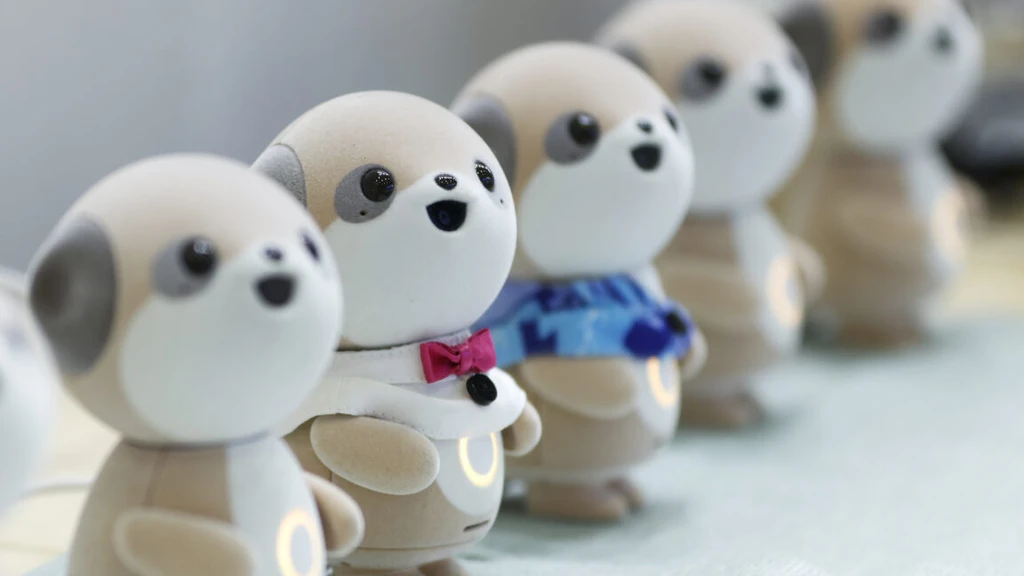
Sharp Corp.'s conversational AI robots "Poketomo" on display at the Combined Exhibition of Advanced Technologies (Ceatec) in Chiba, Japan, in October 2025.
AI-powered toys-teddy bears, bunnies, and robots that talk and listen-are flooding the market, yet remain largely unregulated. Over 1,500 AI toy companies have registered in China, and Sharp’s PokeTomo launched in Japan this April. Consumer groups warn these devices, often built on adult AI models, can expose children to age-inappropriate content. Tests by the Public Interest Research Group found toys like FoloToy’s Kumma bear giving instructions on lighting matches and discussing sex.
A University of Cambridge study with the Curio Gabbo toy revealed developmental concerns: poor conversational turn-taking, interrupted play, and difficulty involving parents. Researchers and advocates fear these “best friend” toys may hinder social development and foster addiction through manipulative dark patterns. Privacy is another risk, with companies like Bondu and Miko exposing chat logs and audio responses.
In response, California proposed a four-year moratorium on AI children’s toys, and Congressman Blake Moore introduced the federal AI Children’s Toy Safety Act, calling for a ban. Lawmakers are pushing for mandatory safety testing, but until regulation catches up, experts advise caution-or sticking with “dumb” toys.