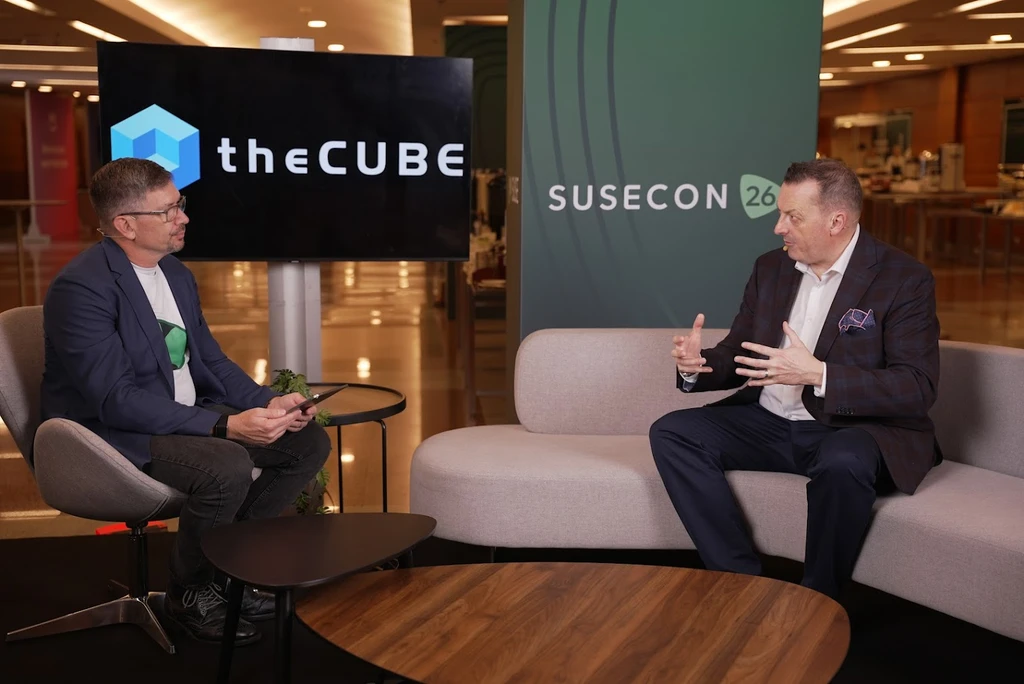
Enterprises are grappling with the dual challenge of accelerating AI innovation while safeguarding proprietary data. The complexity of modern multicloud environments has created a governance gap, with AI adoption outpacing management frameworks. Regulatory pressures and digital sovereignty demands are forcing a re-evaluation of workload management.
Steven Dickens, CEO of HyperFRAME Research LLC, highlighted the overwhelming complexity of managing diverse infrastructure across multicloud strategies, stating that distinct tools for virtual machines, containers, and bare metal create an unmanageable situation.
Key insights from SUSECON 2026 underscore the importance of portable infrastructure for scalable AI innovation. With organizations utilizing multiple clouds, a portable framework is essential for keeping pace with AI adoption and maintaining innovation across diverse environments. Cloud portability is identified as a top strategic priority, especially with regulations like Europe's DORA driving cloud repatriation for data sovereignty.
Dirk-Peter van Leeuwen, CEO of SUSE, cautioned against proprietary lock-in, emphasizing that robust data security and sovereignty are paramount for AI adoption. He advocates for open architectures and transparency, arguing that closed systems hinder rather than help data control. SUSE's resilience framework includes digital sovereignty, operational efficiency, cloud portability, edge, and AI adoption, offering a Kubernetes-based solution for flexible and secure workload deployment across any environment.
AI governance remains a significant concern, with the rise of 'Shadow AI' leading to security breaches. Rhys Oxenham, VP and GM of AI at SUSE, explained the 'production gap' where scaling AI from pilot projects to enterprise-wide deployment with critical data requires robust governance. SUSE's AI stack, including SUSE Rancher Prime and SUSE Linux Enterprise Server, aims to provide observability, automation, and governance for agentic workflows. The company is also delivering Model Context Protocol servers to enable proprietary control without vendor lock-in, emphasizing that digital sovereignty is a global imperative for organizational independence and resilience.