Artificial intelligence is the central theme at the Mobile World Congress, the world's largest mobile industry event in Barcelona. Over 100,000 visitors are expected at the four-day show.
Smartphone makers are emphasizing AI features to enhance everyday tasks and device integration. Samsung's new Galaxy S26 series uses AI to anticipate user needs. Chinese brands like Huawei, ZTE, Xiaomi, and Honor are also showcasing AI-driven hardware and infrastructure, with Honor demonstrating an AI-powered "Robot Phone" concept.
Beyond product launches, discussions focused on deploying AI transparently and responsibly. Experts stressed safe scaling and inclusive deployment, particularly as AI takes on more decision-making roles. Nokia highlighted the critical need for transparency in AI embedded in telecom infrastructure to ensure trust and security.
Companies are exploring AI for operational efficiency. Marketing agencies advise clear direction and framing of AI prompts to achieve desired results, with businesses needing to review output for strategic alignment.
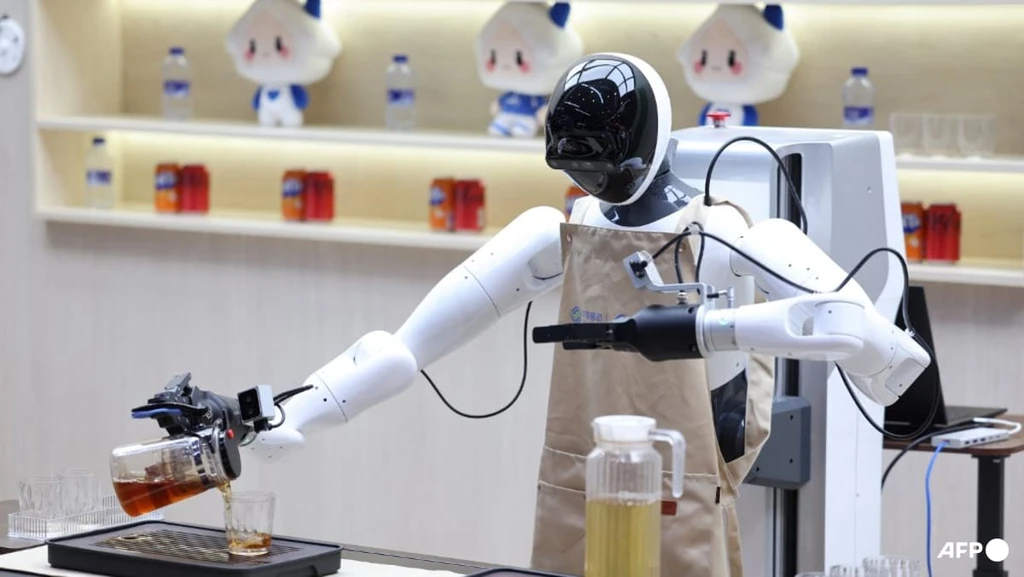
Robotics and AI are advancing into real-world applications, with robots being trained for simple human tasks. Meta showcased smart glasses with real-time translation features. French telecom operator Orange presented its Forest Smart Guardian platform, using AI over 5G networks for fire prevention and response.
LiFi, or light fidelity, a technology transmitting data via light, was also on display, promising more consistent connectivity.
This year's Mobile World Congress clearly demonstrates that artificial intelligence is no longer an optional add-on but a prominent feature across products.