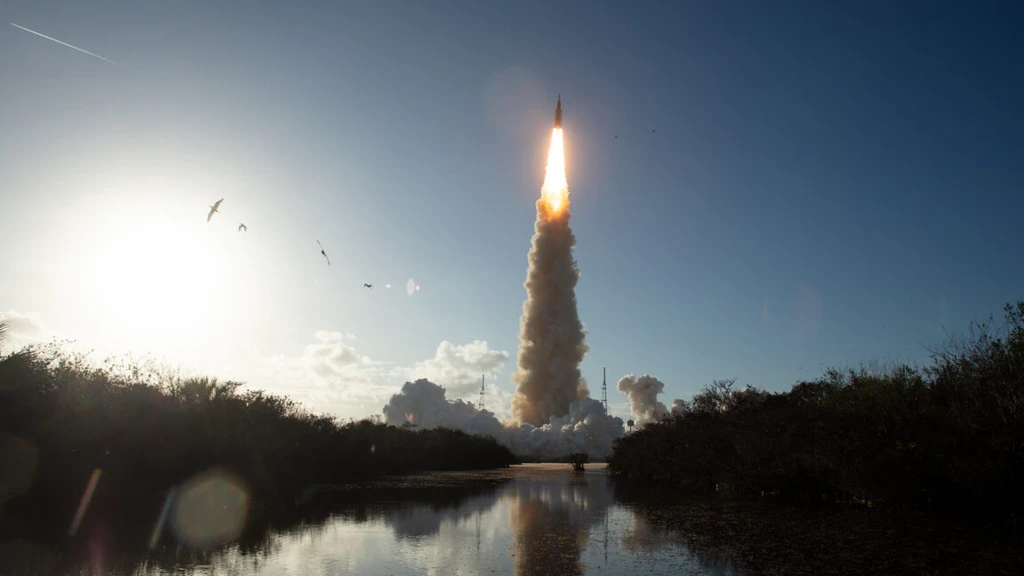
NASA is set to launch its Artemis II mission on Wednesday evening from Florida, signaling a significant step in returning humans to the Moon. This mission comes against a backdrop of global challenges and evolving public interest in space exploration.
Historical Context
In 1968, NASA’s Apollo missions provided solace during a tumultuous era marked by assassinations, riots, and political discord. Today, however, the world is vastly different, with fragmented attention spans and diverse media landscapes. While the Apollo missions captivated an estimated one-quarter of the global population, Artemis II has reached approximately 16 million viewers, indicating a shift in public engagement.
Current Challenges
The Artemis program faces skepticism about its necessity, given past lunar missions. However, NASA Administrator Jared Isaacman emphasizes the urgency driven by China’s ambitions to land humans on the Moon before the U.S., prompting renewed focus and bipartisan support in Congress. Isaacman has streamlined efforts by eliminating redundant programs like the Lunar Gateway and focusing resources on achieving lunar surface goals.
Public Perception
Despite the historical parallels, Artemis II may not replicate Apollo’s cultural impact. With ongoing conflicts and divided public opinion, the mission’s success might offer fleeting public enthusiasm. Yet, NASA’s alignment with commercial partners like SpaceX and Blue Origin underscores a new approach to sustainable lunar exploration, relying on private sector innovation to reduce costs and increase frequency.
Forward Momentum
Artemis II marks a pivotal moment for NASA, showcasing collaboration between government, industry, and international partners. As the mission progresses, it will test execution capabilities and pave the way for future lunar endeavors.
Credit: NASA

Credit: NASA/Bill Ingalls