The concept of autonomous driving is not a modern invention but a century-old pursuit. Early pioneers laid the groundwork for today's self-driving vehicles.
In 1904, Spanish engineer Leonardo Torres Quevedo demonstrated the Telekino, a remote-control system capable of guiding a small vehicle wirelessly from a distance. This marked a significant early step, though it lacked commercial traction due to a lack of investment.
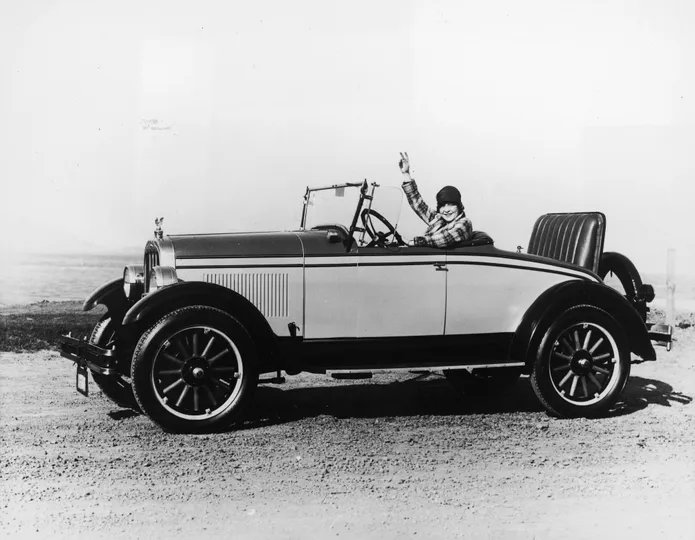
Further advancements emerged in the United States. In 1921, the US Army piloted a radio-controlled vehicle in Dayton, Ohio. By 1930, inventor Francis P. Houdina showcased the "American Wonder," a 1926 Chandler that responded to radio commands on New York City streets. Inventors like Maurice J. Francill in Toledo continued to explore radio-controlled vehicles throughout the late 1920s and 1930s.
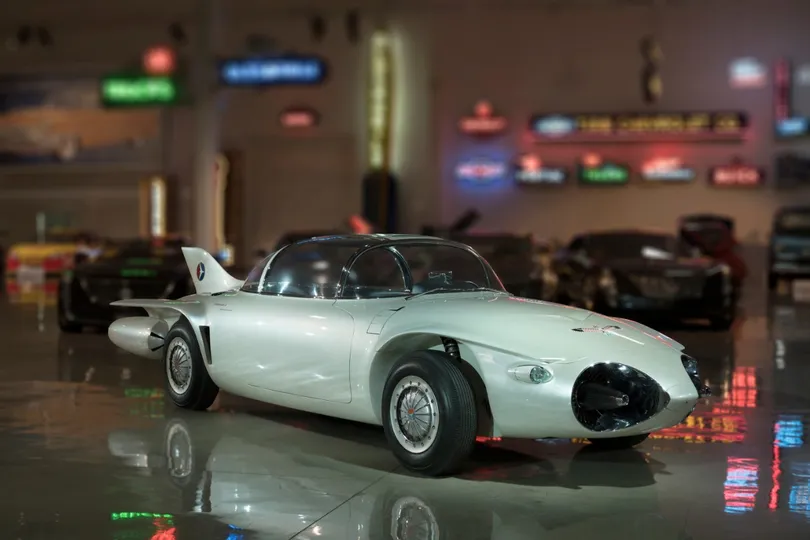
General Motors envisioned a future of autonomous transport at the 1939 New York World's Fair with its Futurama exhibit. Post-World War II, GM's 1956 Firebird II concept proposed autonomous driving using embedded electronic strips in highways.
Proof of concept arrived in 1958 with tests on a Nebraska highway using embedded electric circuits to guide specially fitted Chevrolets. In the UK, the Transport and Road Research Laboratory experimented with magnetic cables to control a Citroën DS at high speeds.
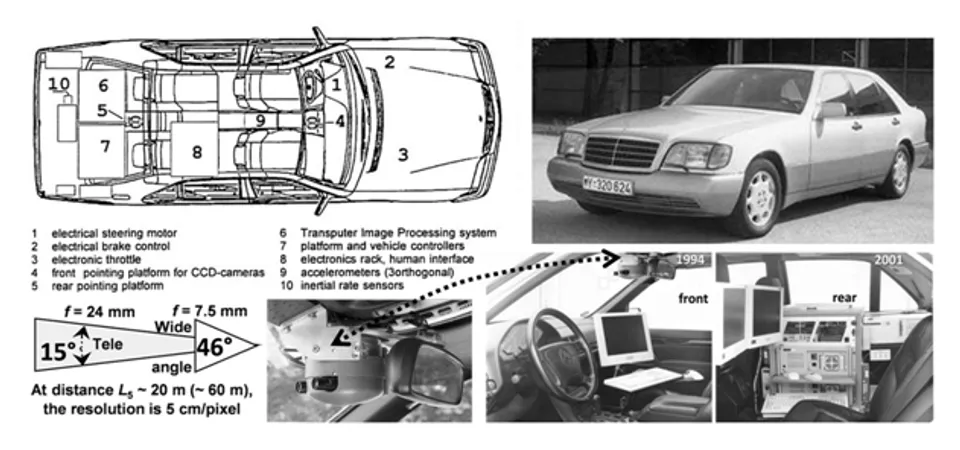
The modern era of autonomous driving saw significant progress in the late 20th century. German scientist Ernst Dickmanns began testing a computer- and sensor-equipped Mercedes-Benz in 1986, which traveled on the Autobahn autonomously. By 1994, his team demonstrated driverless sedans navigating traffic at Charles de Gaulle Airport.
The Defense Advanced Research Projects Agency (DARPA) spurred innovation with its Grand Challenge competition in the early 2000s, offering a prize for the first autonomous vehicle to cross the Mojave Desert. While initial attempts were humbling, the competition fostered a community of engineers dedicated to solving the challenges of self-driving technology.