
Excessive use and oversight of artificial intelligence in the workplace are leading to what researchers call 'AI brain fry,' a state of mental fatigue contrary to AI's promise of easing job pressures.
Workers interacting with AI tools report that the technology is intensifying, not simplifying, their tasks. A study of nearly 1,500 US workers found 14% experienced mental fatigue from excessive AI interaction and oversight, describing symptoms like a 'mental hangover,' 'fog,' headaches, slower decision-making, and difficulty focusing.
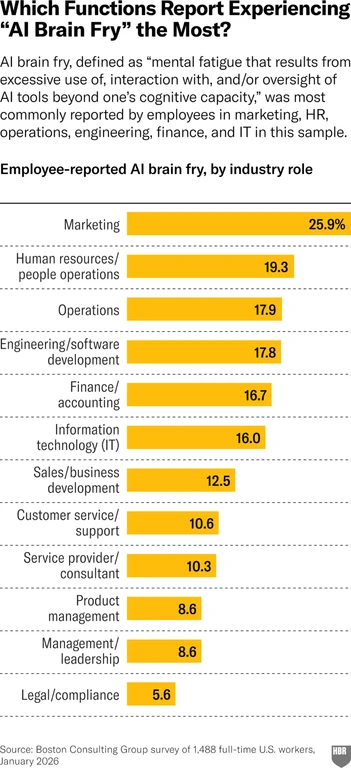
Marketing and HR professionals reported the highest levels of this AI-induced strain. While AI is promoted as a productivity booster, employees often find themselves juggling multiple tools, leading to increased multitasking rather than focusing on meaningful work.
This mental strain carries significant costs, including increased employee errors, decision fatigue, and a higher intention to quit. Those experiencing AI brain fry were 33% more likely to report decision fatigue and 40% more likely to have an active intent to leave their jobs. They also made nearly 40% more major errors.
However, AI can still decrease burnout when used to automate repetitive tasks. Workers using AI for routine duties reported 15% lower burnout levels. Experts advise organizations to clearly define AI's purpose, manage workload changes, and focus on measurable outcomes rather than incentivizing AI usage quantity.