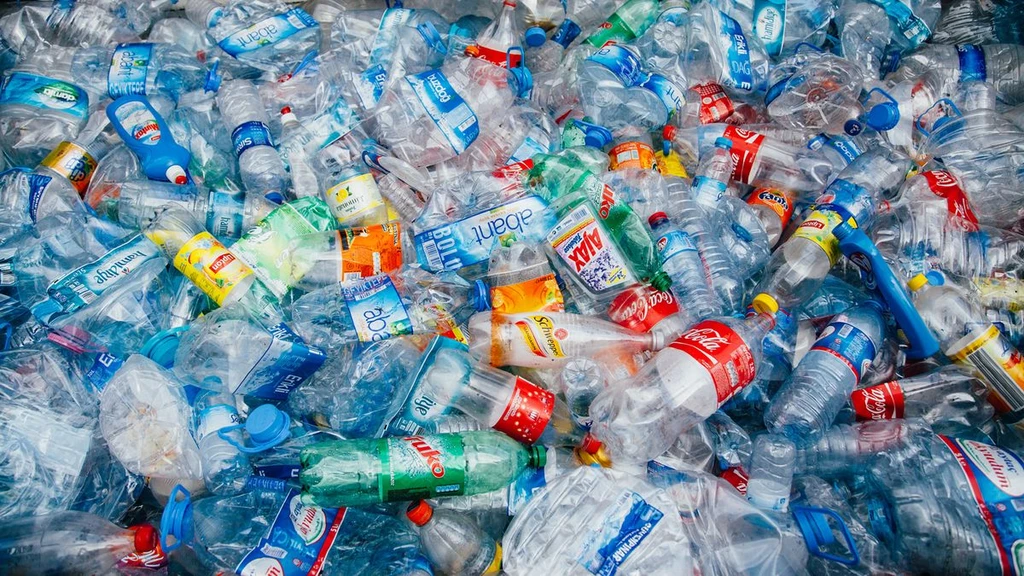
Scientists at the University of Cambridge have developed a method to convert plastic waste into clean hydrogen fuel using solar energy and sulfuric acid recovered from old car batteries.
The process addresses two waste streams simultaneously: hard-to-recycle plastics and spent battery acid. Researchers ground PET plastic bottles into powder, dissolved them in concentrated sulfuric acid, and heated the mixture to 284 degrees Fahrenheit. This breaks the plastic down into its original monomers: ethylene glycol and terephthalic acid.
Rather than using fresh acid, the team extracted sulfuric acid from recycled car batteries, which typically only have their lead recovered. This adds a sustainability layer to the process.
A molybdenum-based catalyst added to the mixture, when exposed to light, drives a reaction that converts the ethylene glycol into hydrogen gas and acetic acid. The approach can also be adapted for hydrogenation reactions, which produce pharmaceutical building blocks with half the carbon footprint of traditional methods.
The researchers published their findings in the journal Joule and a follow-up study in Angewandte Chemie International Edition. The team is now working to scale the process for commercial use.