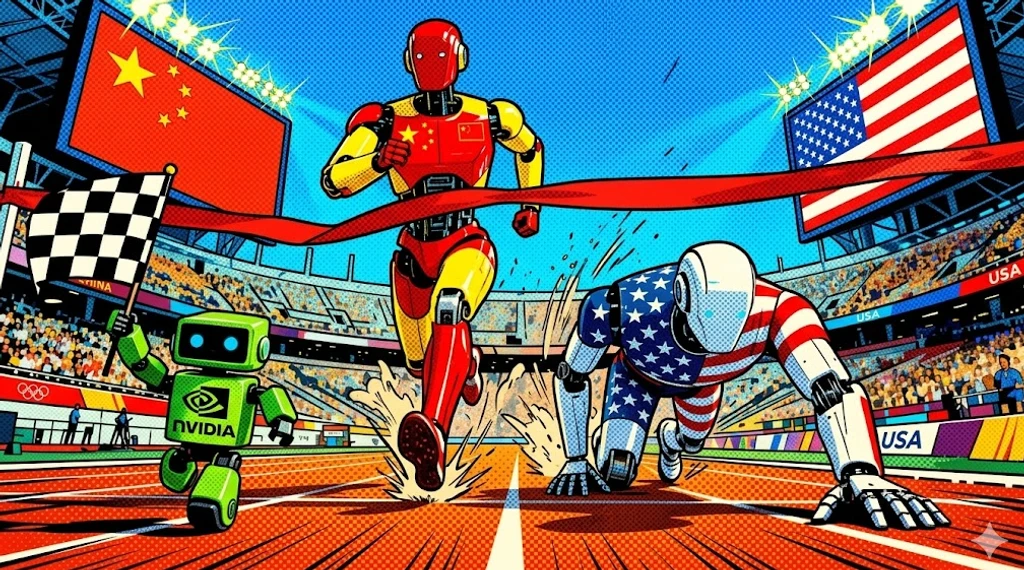
A new report from Stanford University's Institute for Human-Centered Artificial Intelligence (HAI) reveals a dramatic shift in the global artificial intelligence landscape. China has reportedly matched the United States in AI performance benchmarks, ending America's long-held lead. While the U.S. still dominates in capital and AI chip infrastructure, China now leads in patents, publications, and autonomous robotics.
This intense competition for AI supremacy is prompting many nations to prioritize AI sovereignty and invest heavily in infrastructure. However, a growing digital divide could marginalize countries unable to shape AI development, potentially excluding them from economic benefits.
The report also highlights increasing corporate influence and a decline in transparency. Over 90% of notable AI models are now developed by private companies, with major players like Google, Anthropic, and OpenAI withholding details on dataset sizes and training code. This coincides with a significant drop in public trust, with only 31% of U.S. citizens trusting their government to regulate AI.
Generative AI adoption is surging globally, outpacing previous technological revolutions. However, public sentiment remains divided, with a majority expressing both optimism and nervousness. Despite leading in AI development, the U.S. ranks only 24th in adoption. The economic impact is substantial, with corporate investment skyrocketing and significant consumer surplus generated.
Concerns are mounting over the physical costs of AI, including excessive energy and water demands, and the potential environmental impact of training large models. Additionally, while AI tools boost individual scientist productivity, there's a worry that AI research is becoming less diverse, favoring data-rich topics.